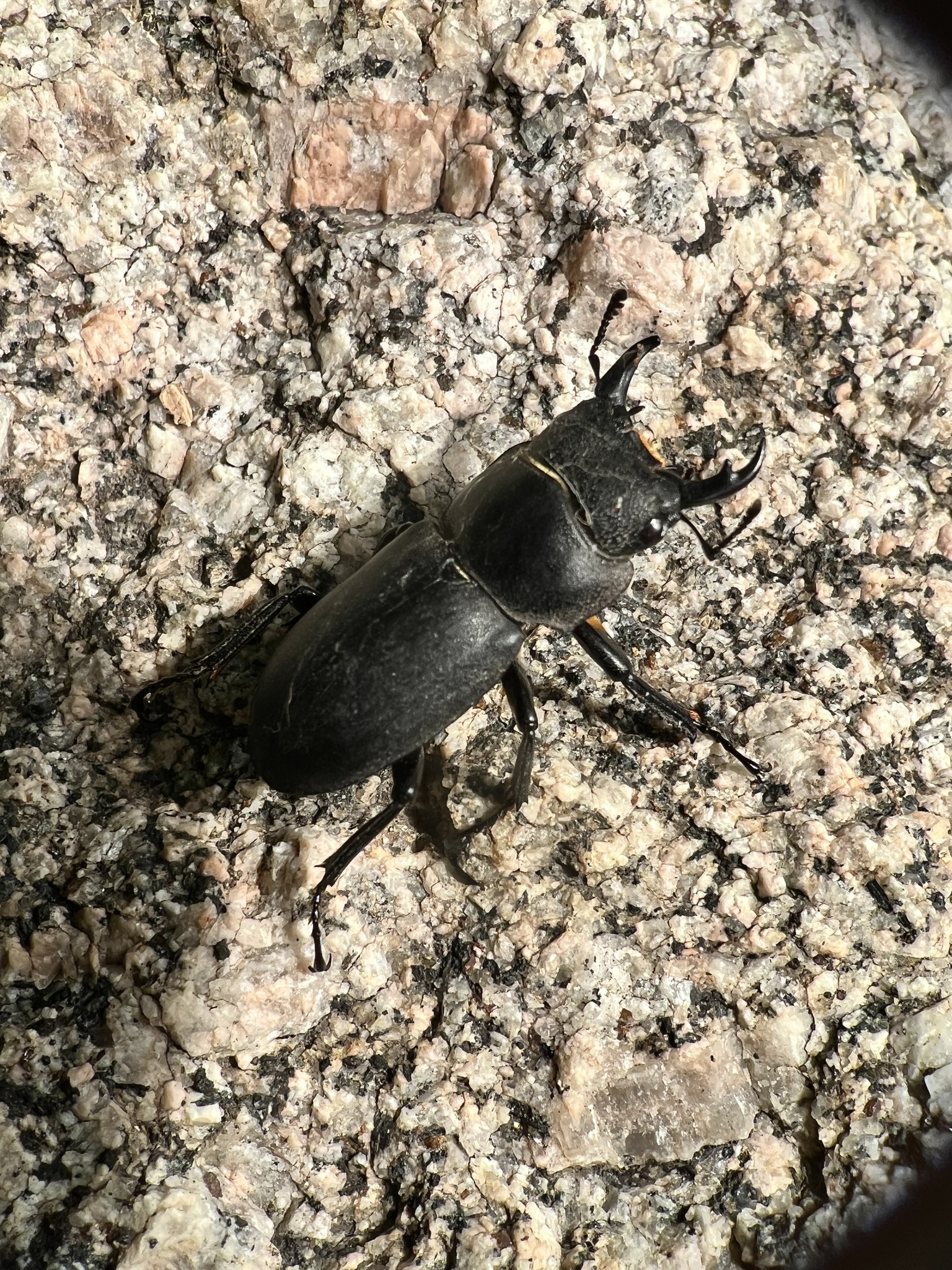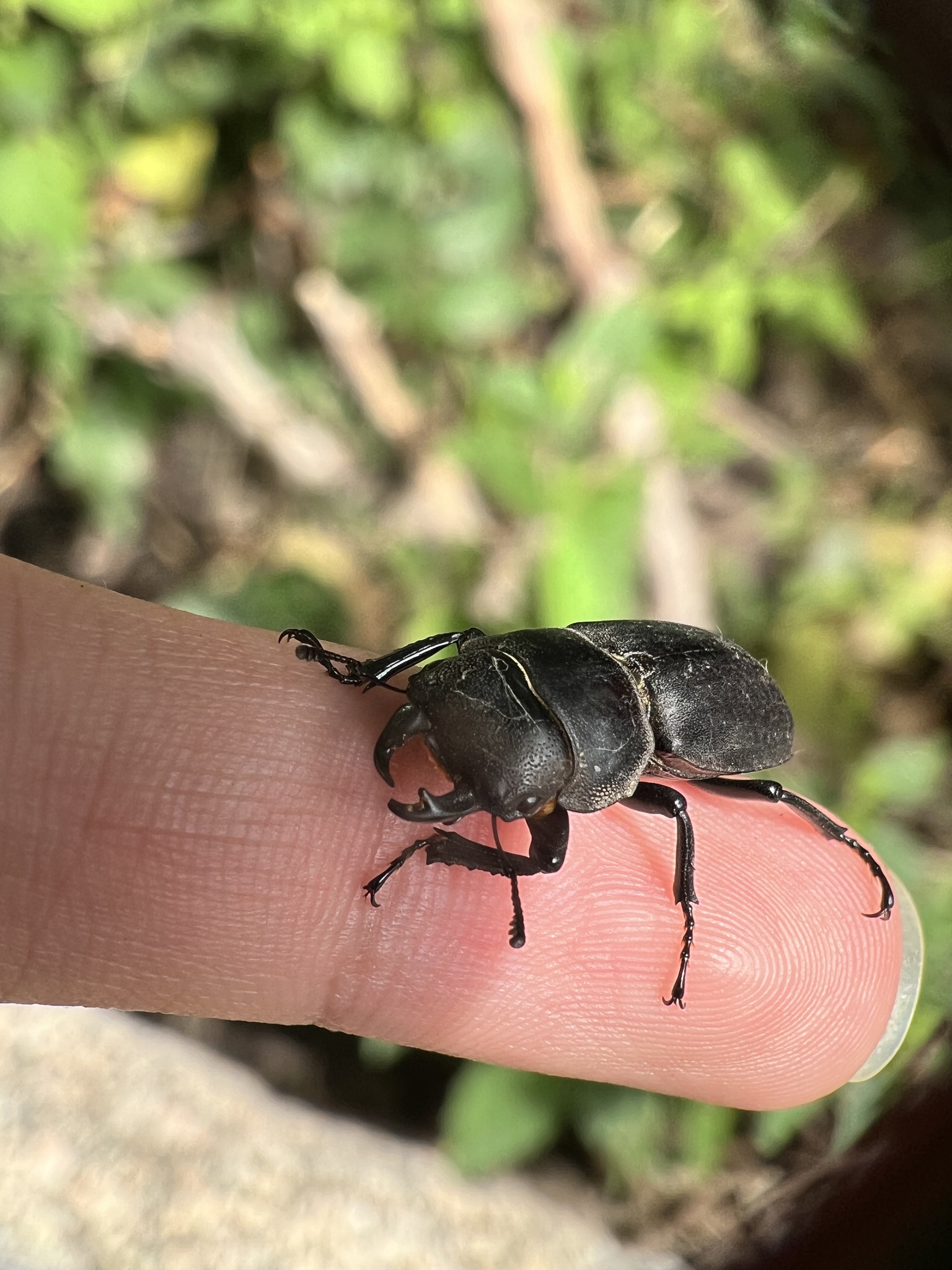
A stag beetle on a sun-warmed rock
It was sitting on a bare patch of rock, its dark shell drinking in the August sun. At first glance it could have been a pebble with legs. Then the heavy mandibles gave it away: a stag beetle, motionless and unbothered by the camera inches from its face.
This is Dorcus davidis, a member of the stag beetle family Lucanidae. The species name honours Armand David, the 19th-century French missionary and naturalist who collected it in China, and who is better known today for introducing the giant panda and Père David’s deer to Western science. The beetle carries his name more quietly, but no less proudly.
Stag beetles are gentle giants of the insect world. The adults feed mainly on tree sap and ripe fruit, while their larvae spend years chewing through decaying wood. Males of many species use their enlarged mandibles in wrestling matches over mates, though the jaws are far less fearsome than they look. This individual’s modest mandibles suggest it was a female or a smaller male, taking it easy in the afternoon heat.
Finding a wild stag beetle in the hills around Beijing is always a small thrill. It is a reminder that even close to the city, pockets of woodland still hold creatures that have been doing their unhurried, woody business since long before we arrived.