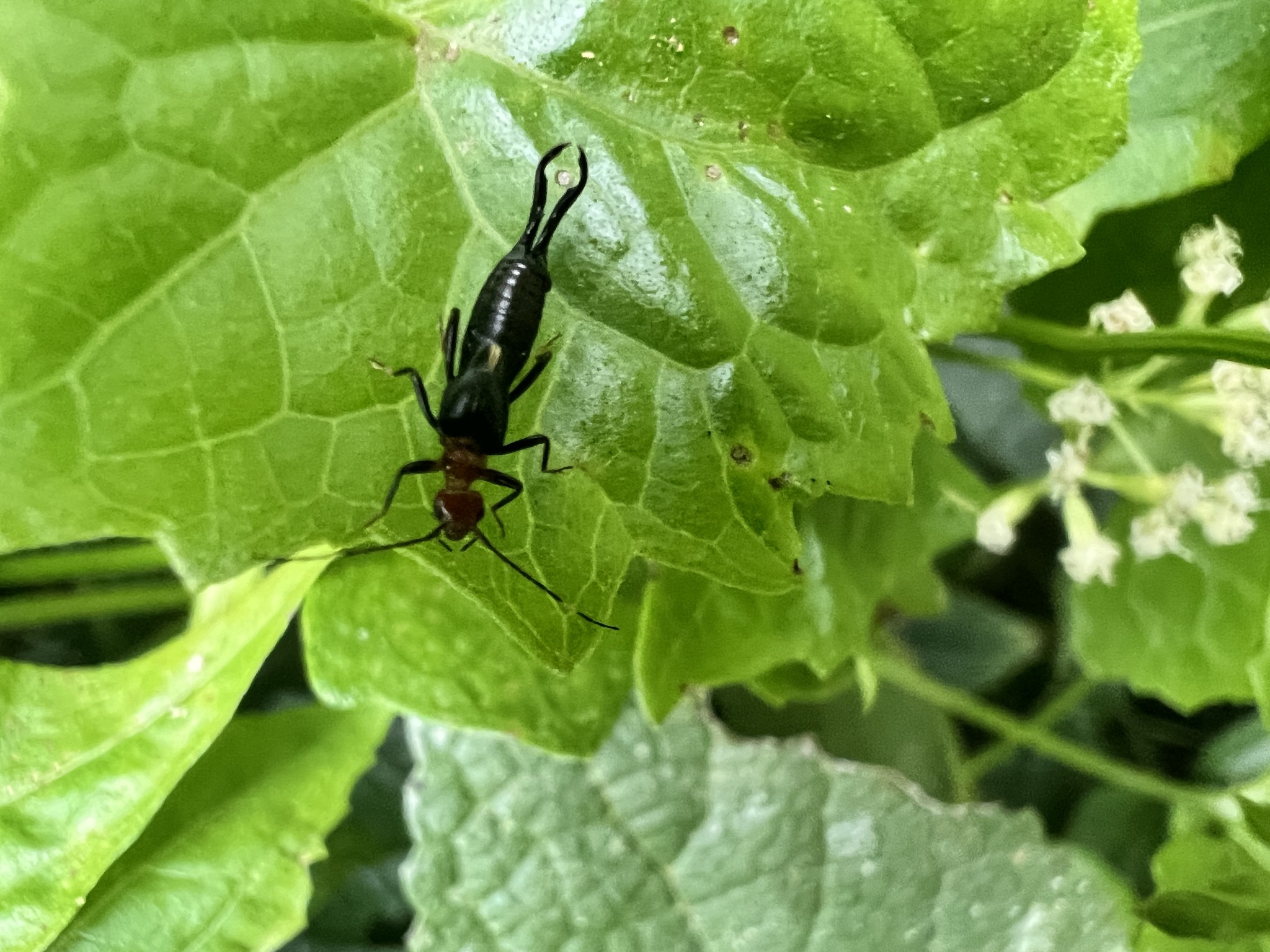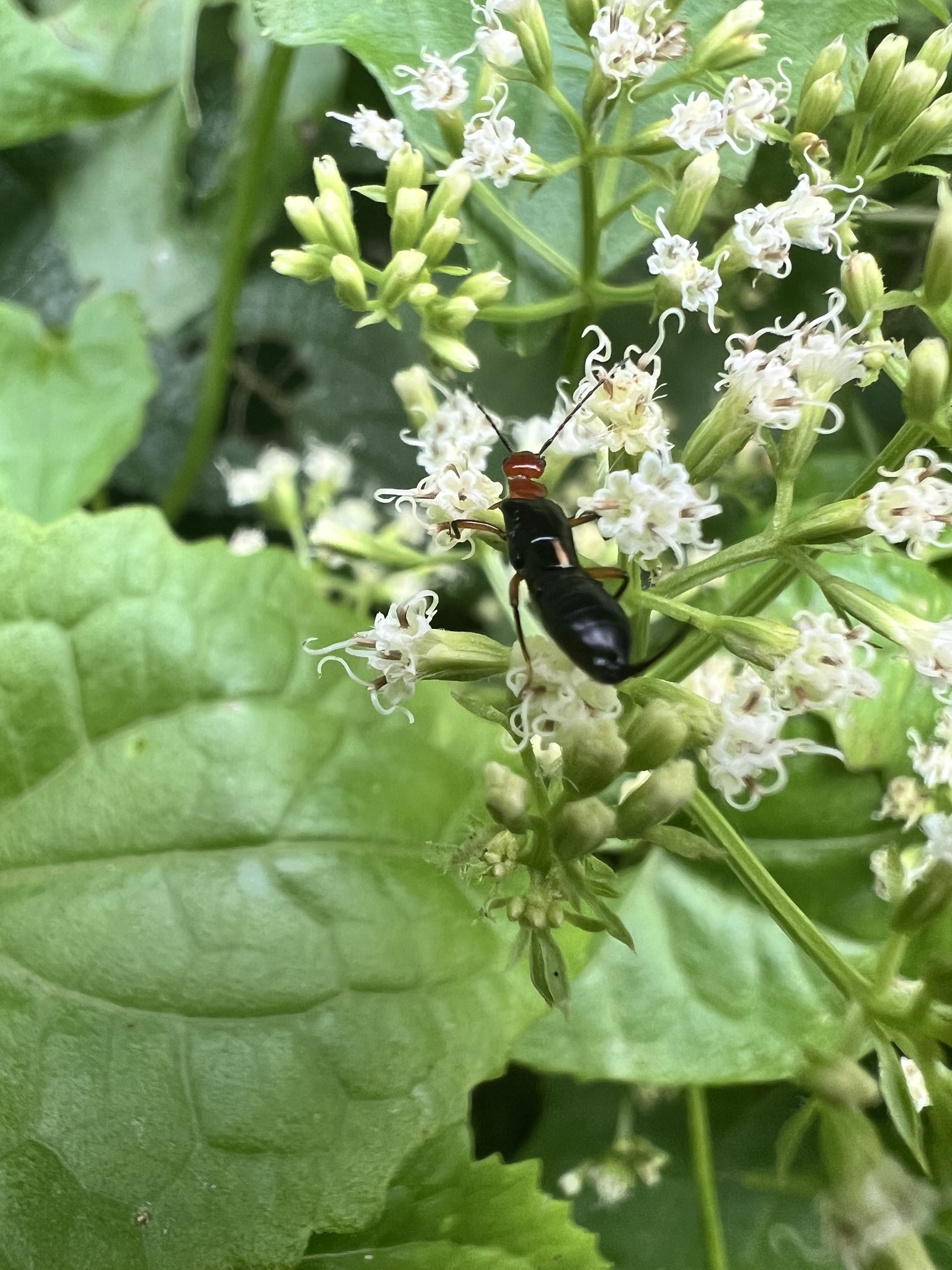
A red-headed earwig on a green leaf
On a green leaf in Lombok, ringed by white flowers and dark stems, sat an earwig that looked like it had been dipped in ink and then had its head dipped again in red. The body was glossy black, the head a bright crimson, and its long, slender antennae curved forward as it watched me. It held its ground while I moved in for the shot, the picture of patience.
This is Eparchus cruentatus, a member of the family Forficulidae in the order Dermaptera, the earwigs. The species name cruentatus means bloodied or stained with blood, a fair description of that red head. Earwigs are easily recognised by the forceps-like pincers at the tip of the abdomen, which they use for defence, for courtship, and for sorting out arguments with each other. Despite the old tales, they do not crawl into ears, and they are mostly harmless, helpful scavengers and predators in the leaf litter.
Forficulidae is the family of the typical earwigs, the ones with the big, curved forceps that most people picture. They are night-active creatures, hiding by day under bark, stones and dead leaves, so finding one sitting openly on a leaf in daylight felt like a small gift.
Earwigs are one of those groups everyone recognises and almost no one can name. Tell someone you found a red-headed earwig and they will probably look confused; show them the pincers and the story clicks instantly. This one was a stunner, and it stayed calm long enough to prove it.