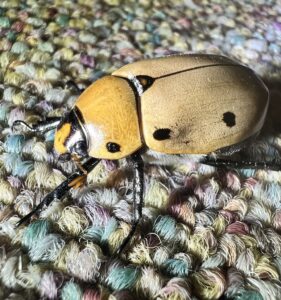
A golden scarab with an appetite for grapes
On a warm July evening in Rhode Island, something polished and golden was sitting on a leaf at eye level. At first I took it for a piece of amber jewelry, then it moved. It was a grapevine beetle, basking in the last light of the day, and it let me take my time getting a good look.
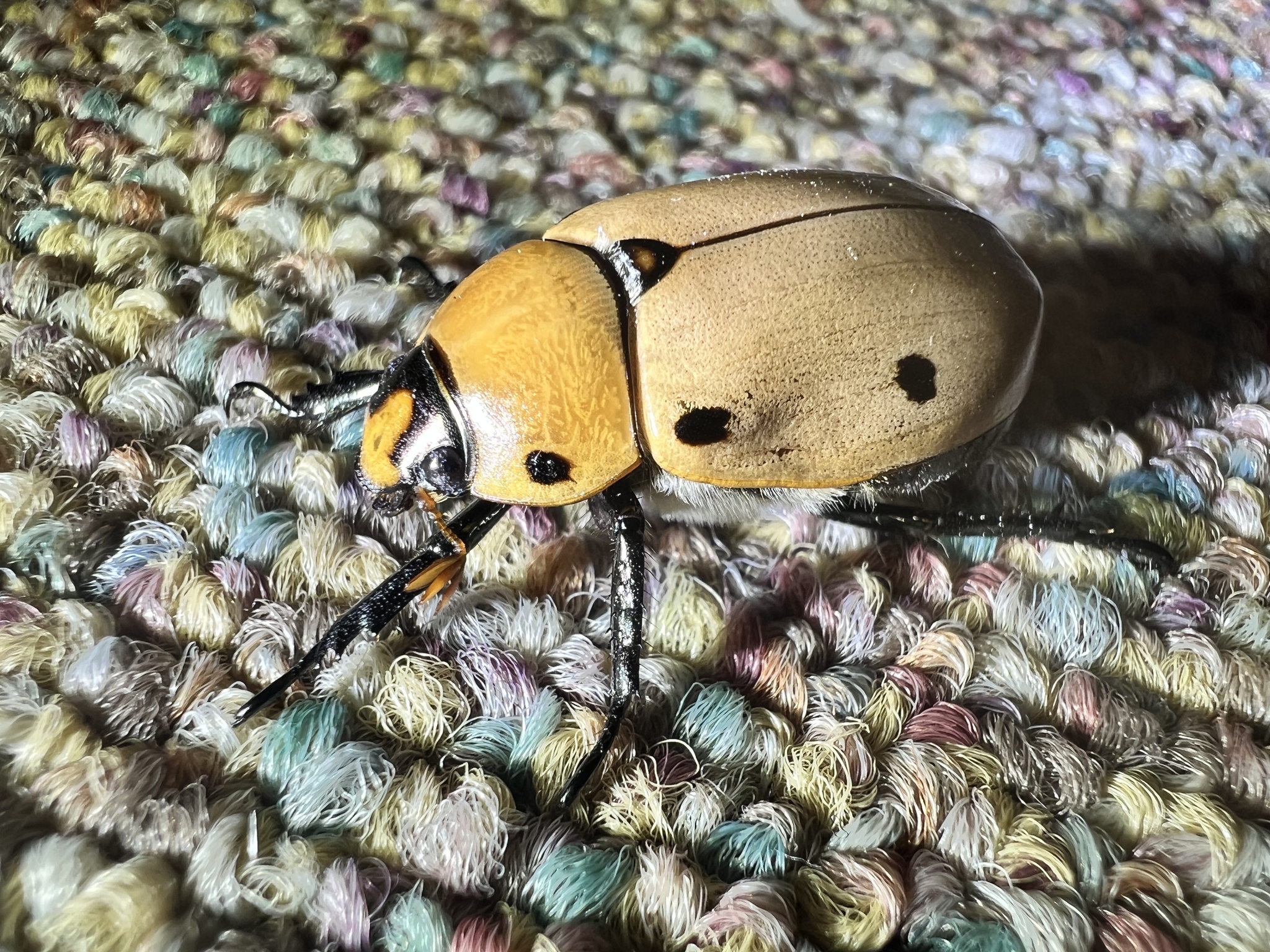
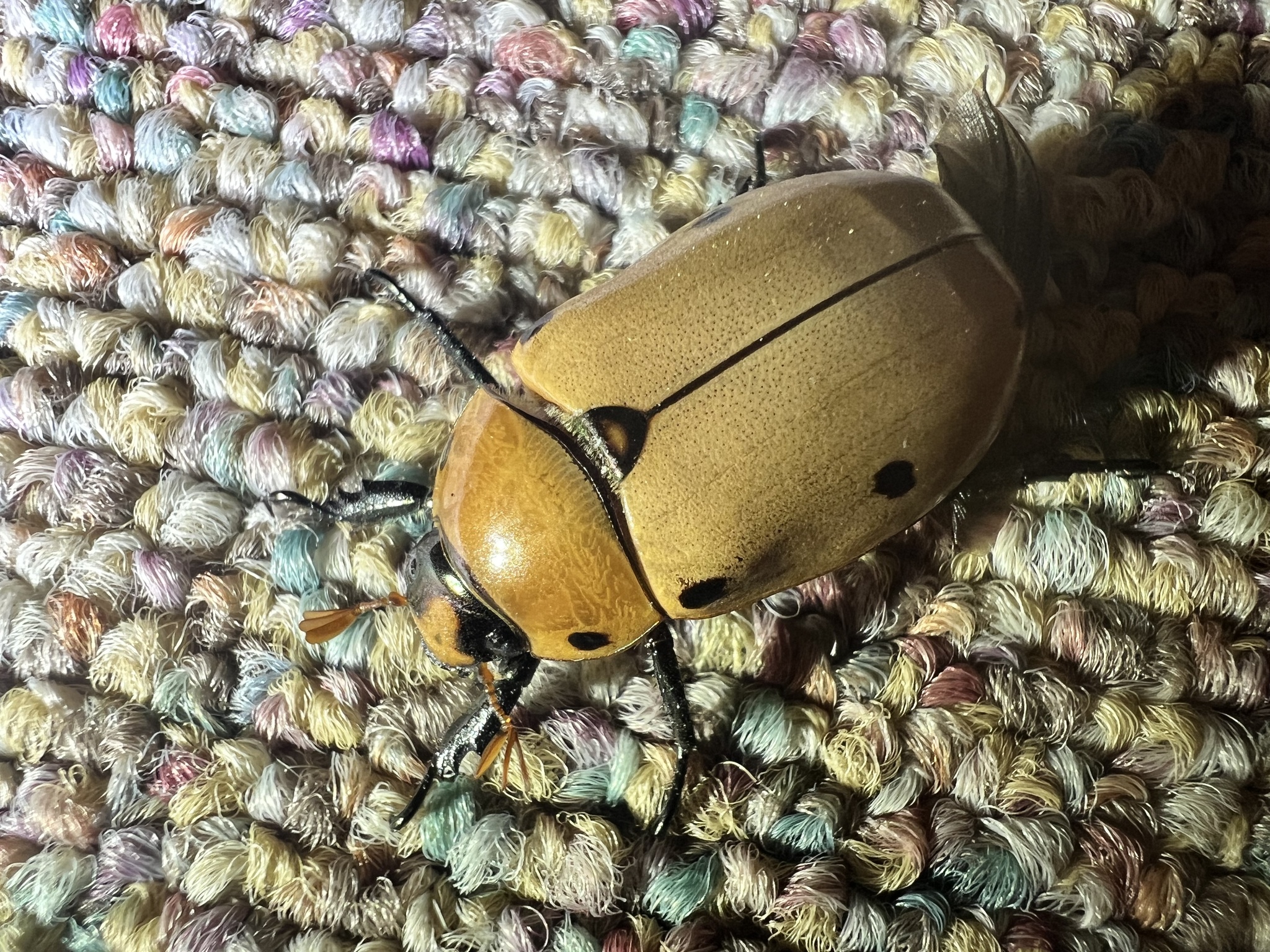
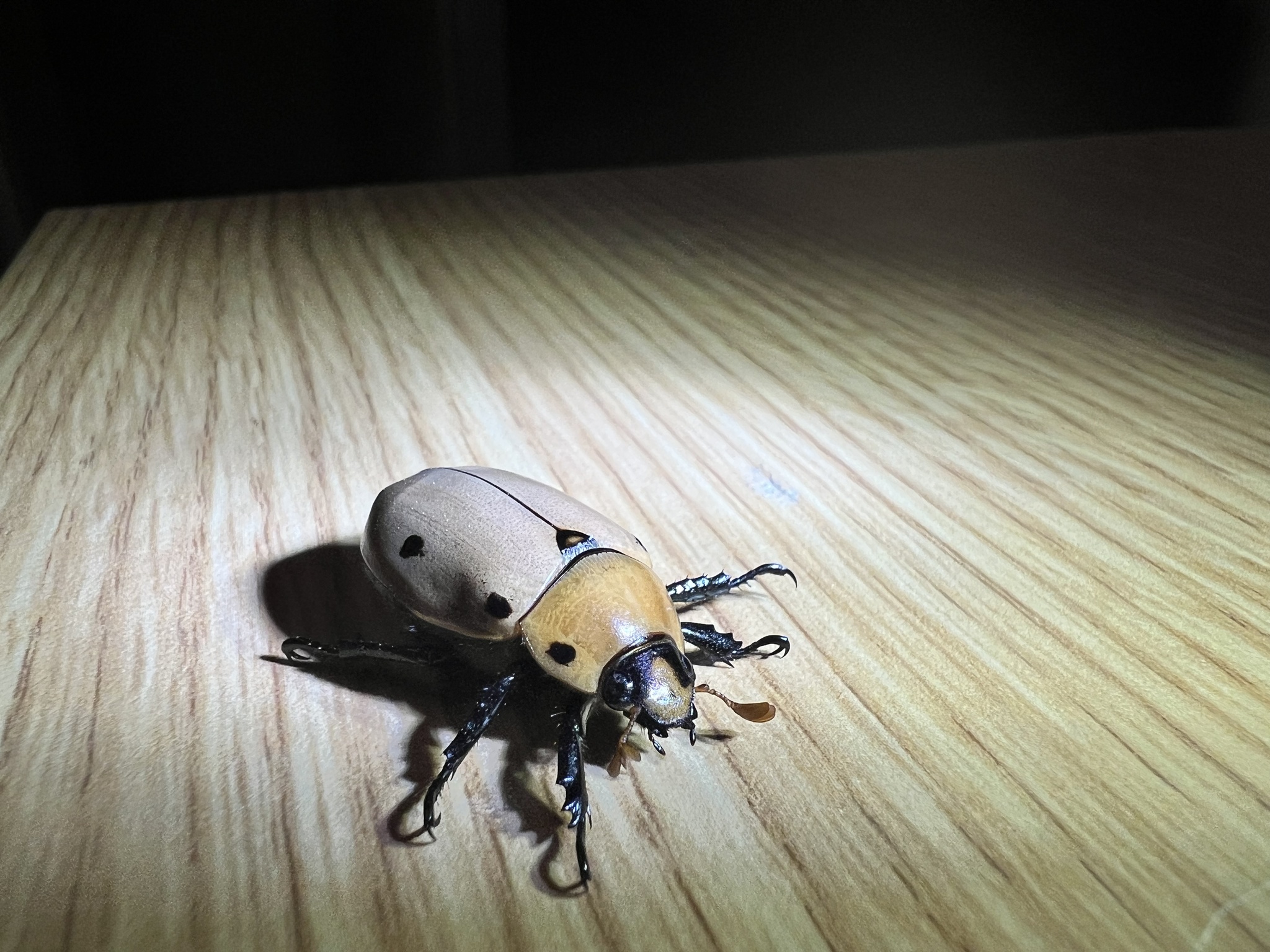
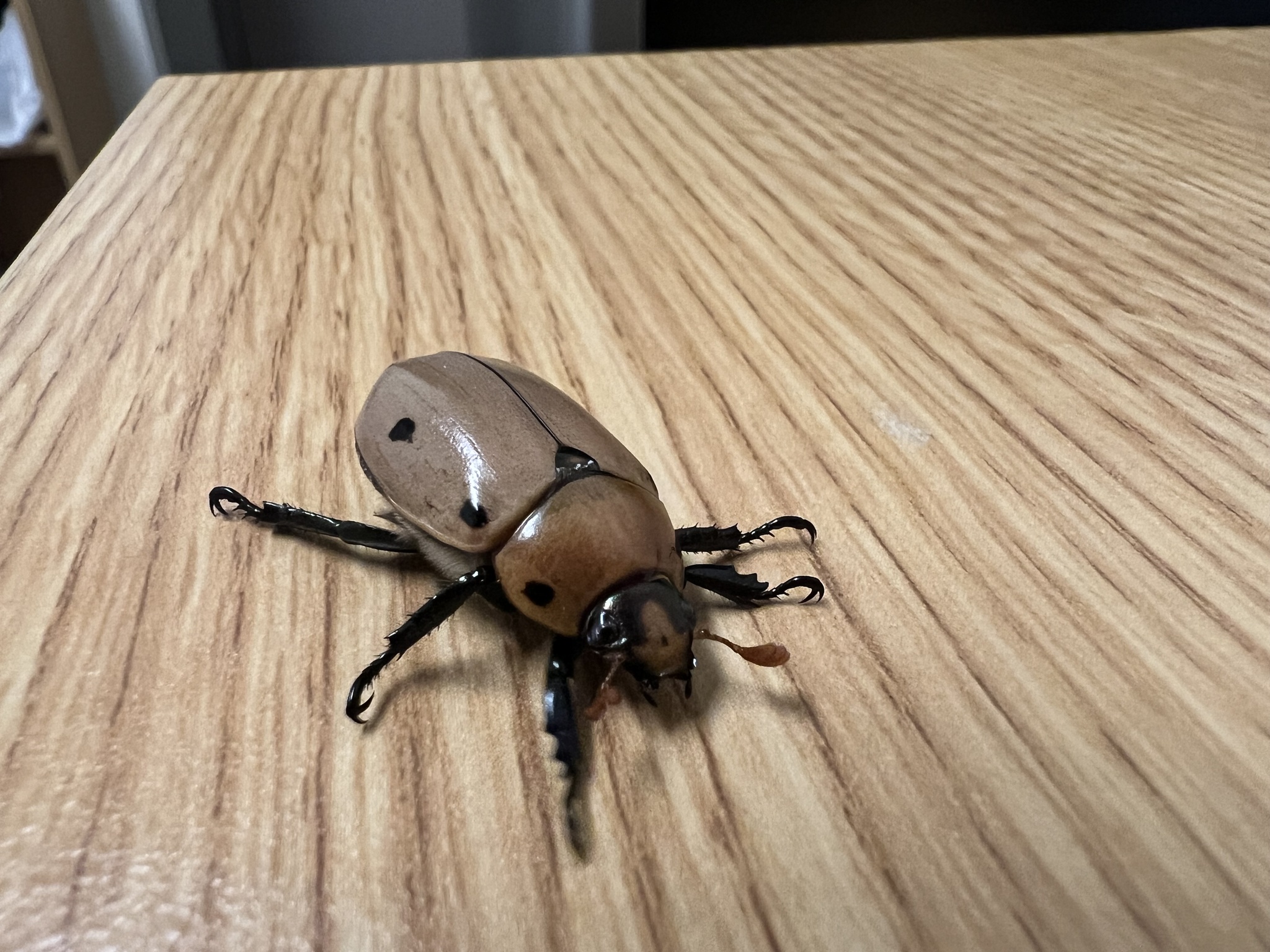
This is Pelidnota punctata, a scarab beetle in the family Scarabaeidae, order Coleoptera. The shell is a warm tan-gold, marked with a scattering of dark spots, and the species name punctata means “spotted,” which sums it up neatly. It belongs to the Rutelinae, the shining leaf chafers, a subfamily known for glossy, jewel-like colors. In good light the surface has a soft sheen, and the whole insect looks like it was carved from polished wood.
Adults feed on grape leaves, hence the common name, and they are also drawn to ripe fruit, occasionally visiting orchards at dusk. The larvae are the classic white grubs, living in and feeding on rotting wood and roots, and they take a while to mature, which is typical of scarabs.
I have always liked how a beetle this flashy still leads a quiet life: chew a leaf, find a mate, raise grubs in the dark. The shine is just how the Scarabaeidae roll. It stayed on its leaf until the light went out, and I left it to its evening. It is a good reminder that the scarab family, famous for sacred beetles in ancient Egypt, also turns up quietly in the hedgerows of New England.