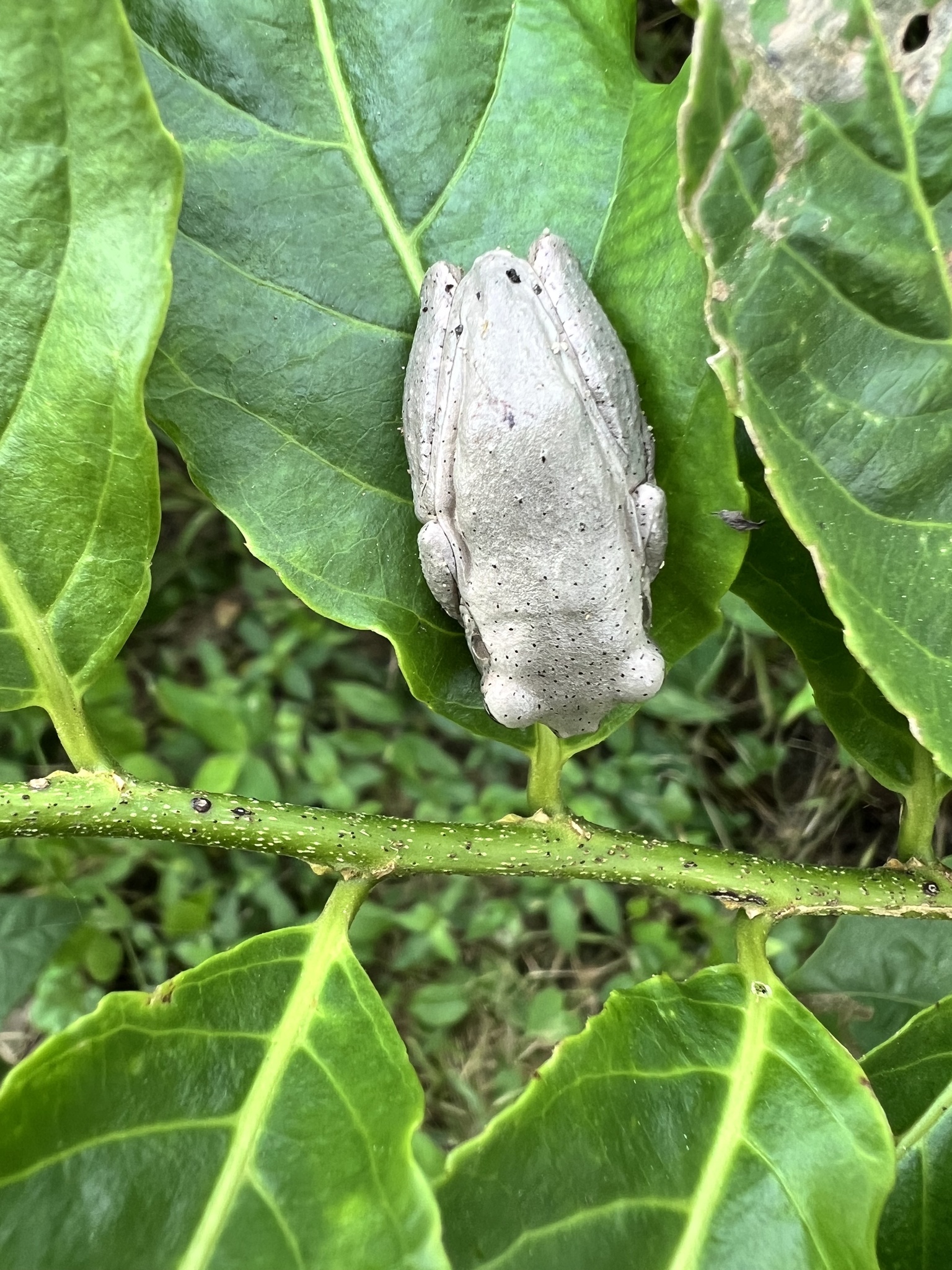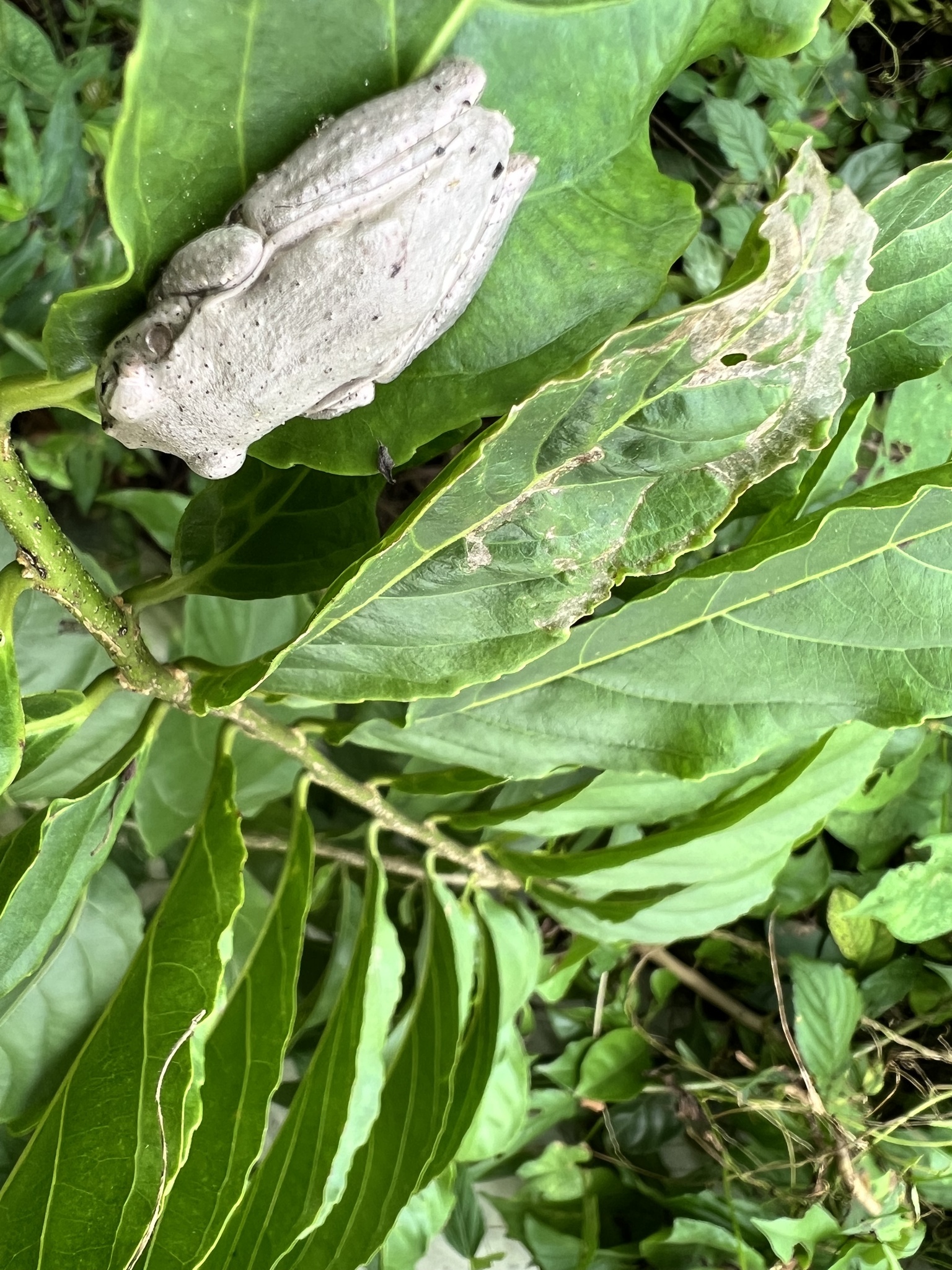
A tree frog with a bony helmet
Late on a December night in the Dominican Republic, the garden was full of calling frogs. One voice was louder than the rest, and tracing it with the flashlight led me to a large, chunky tree frog clinging to a broad leaf, its throat still swollen from the last call. It watched me with the unhurried confidence of an animal that knows it owns the night. The calls had started at dusk and showed no sign of stopping.
This is Osteopilus dominicensis, the Hispaniolan common tree frog, a member of the tree frog family Hylidae in the order Anura. It is one of the largest tree frogs of the island of Hispaniola, and it is everywhere: in gardens, on window screens, in rain gutters, calling from bushes after every shower. The big toe pads that let it climb glass and leaves are the classic hylid trademark.
The genus name gives away its most interesting secret. Osteopilus means “bone cap,” and many species in the genus have skull bones fused into a helmet-like shield over the head. It is an odd piece of armor for a frog, probably a defense against predators and a way to slow water loss, and it gives the head a slightly boxy look if you know what to check for.
Finding the largest tree frog on the island in a backyard, singing at full volume, is a reminder that spectacular animals do not always need spectacular habitats. Sometimes a damp leaf and a loud voice are enough.