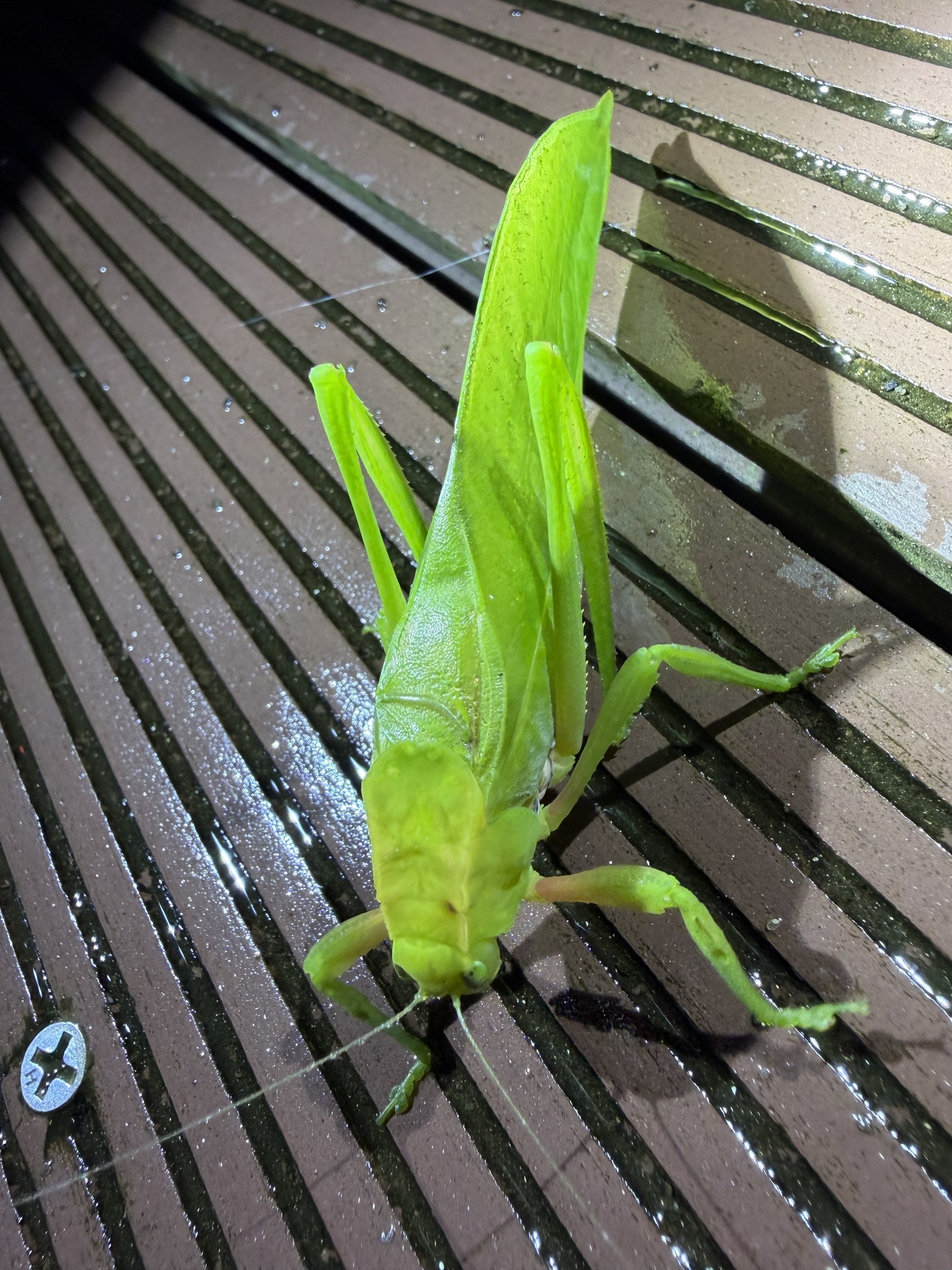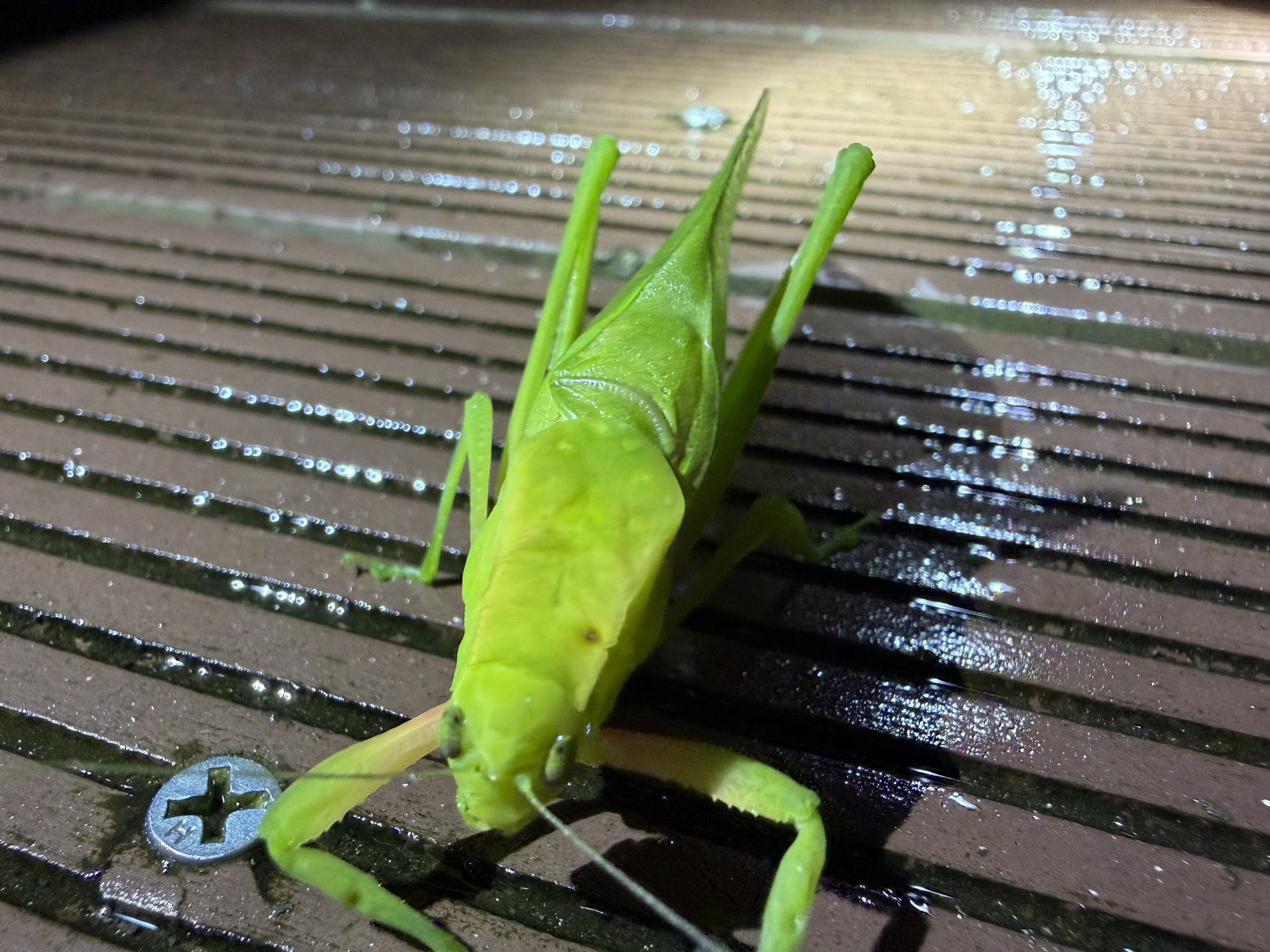
A bright green katydid with red feet
The wooden floor was wet from the morning rain, with metal strips running through it, and in the middle sat a katydid the colour of fresh leaves. It was a large one, with broad translucent wings and antennae so long and curved they swept past its own body. It stayed put as I leaned in, rain still beading on the wood around it.
This is Paraxantia rubripes, a katydid of the family Tettigoniidae, order Orthoptera. The species name rubripes means red-footed, the sort of name that makes you want to check the legs. Its antennae were easily twice the body length, and they swept the air ahead like a pair of blind canes. Katydids are close relatives of crickets, and like them the males sing by stridulation, but many tettigoniids are leaf-green and broad-winged, masters of sitting unnoticed among foliage until they move.
Most katydids are plant feeders, and a large one like this is an accomplished leaf eater in the understorey. When threatened, many katydids simply freeze, and the green ones rely on looking like a leaf until the danger passes. The common name katydid is said to echo the song of some North American species, which sounds like a repeated question: Katy did, Katy didn’t.
In the wet forests of Medog, greens like this one are the default costume, but the red feet gave it away. I left it to the dripping wood and the quiet business of pretending to be a leaf.