A stag beetle that sat on my hand and stayed
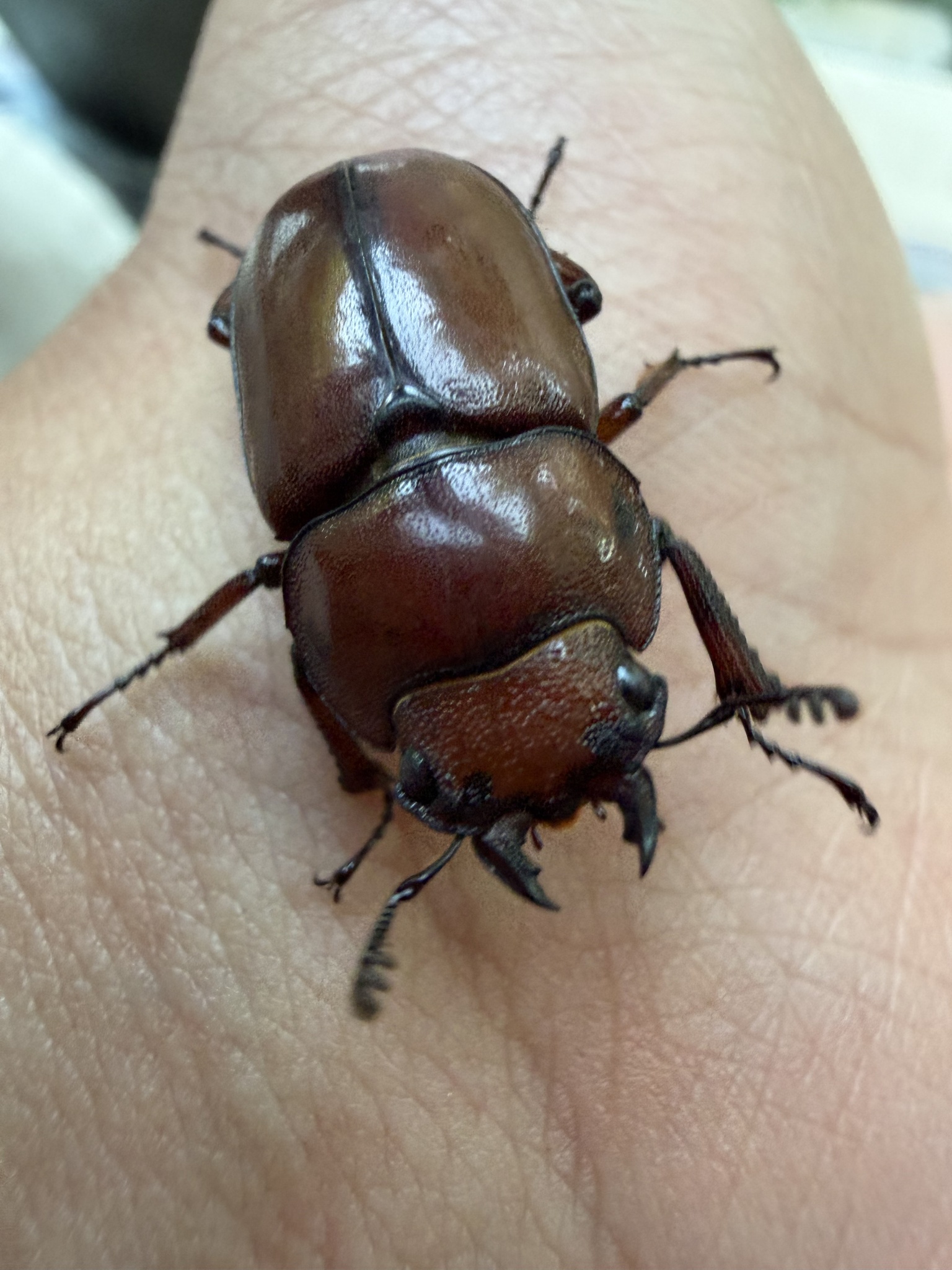
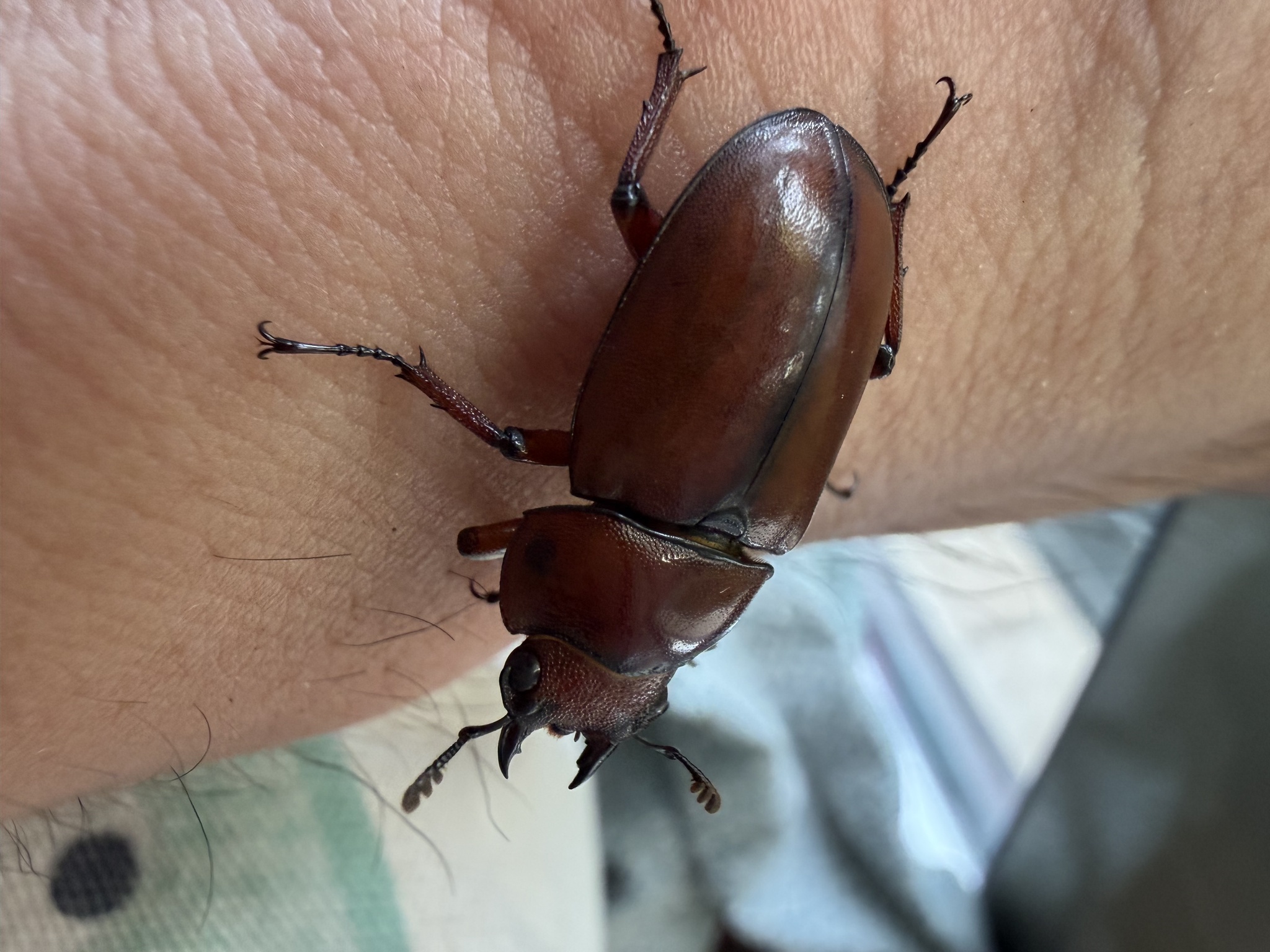
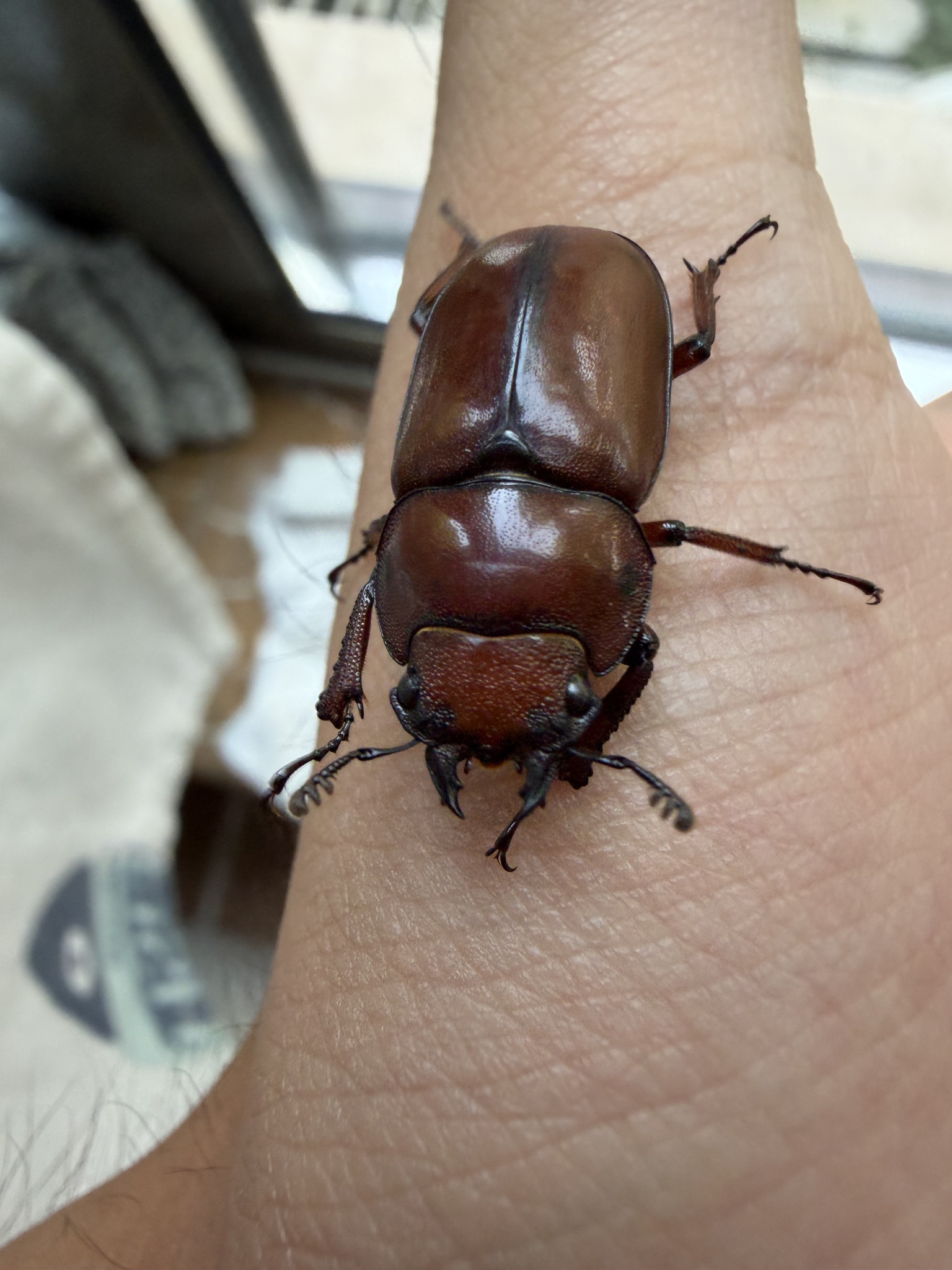
On the second of July in Medog, I turned around to find this stag beetle sitting on the back of my hand, as if it had been waiting there for me. The background dissolved into a soft blur, but the beetle itself was sharp: deep brown, broad and glossy, with a pair of horn-like projections on the sides of its head. It did not flinch, did not panic. It just sat there, apparently deciding whether I was worth its attention.
This is Prosopocoilus astacoides kachinensis, a member of the stag beetle family Lucanidae in the order Coleoptera. The species name astacoides means “crayfish-like”, a nod to the long, curved jaws that give these beetles their stag-like silhouette. The subspecies name kachinensis points to Kachin, the region of northern Myanmar just across the mountains from the forests where this individual was found.
Like most stag beetles, its early life was spent in darkness, the larva chewing through decaying wood for years before emerging as this glossy adult. The adults are gentler customers of the forest, feeding on tree sap and ripe fruit. Those impressive mandibles are mostly for show: males use them in wrestling matches over sap sites and mates.
A close relative of this subspecies, the two-spotted saw stag, is a familiar name in the beetle hobby in China, raised by keepers from egg to adult. Meeting one of its wild cousins here, calm on my hand in the damp forest air, felt a little like bumping into a celebrity backstage at their own show.