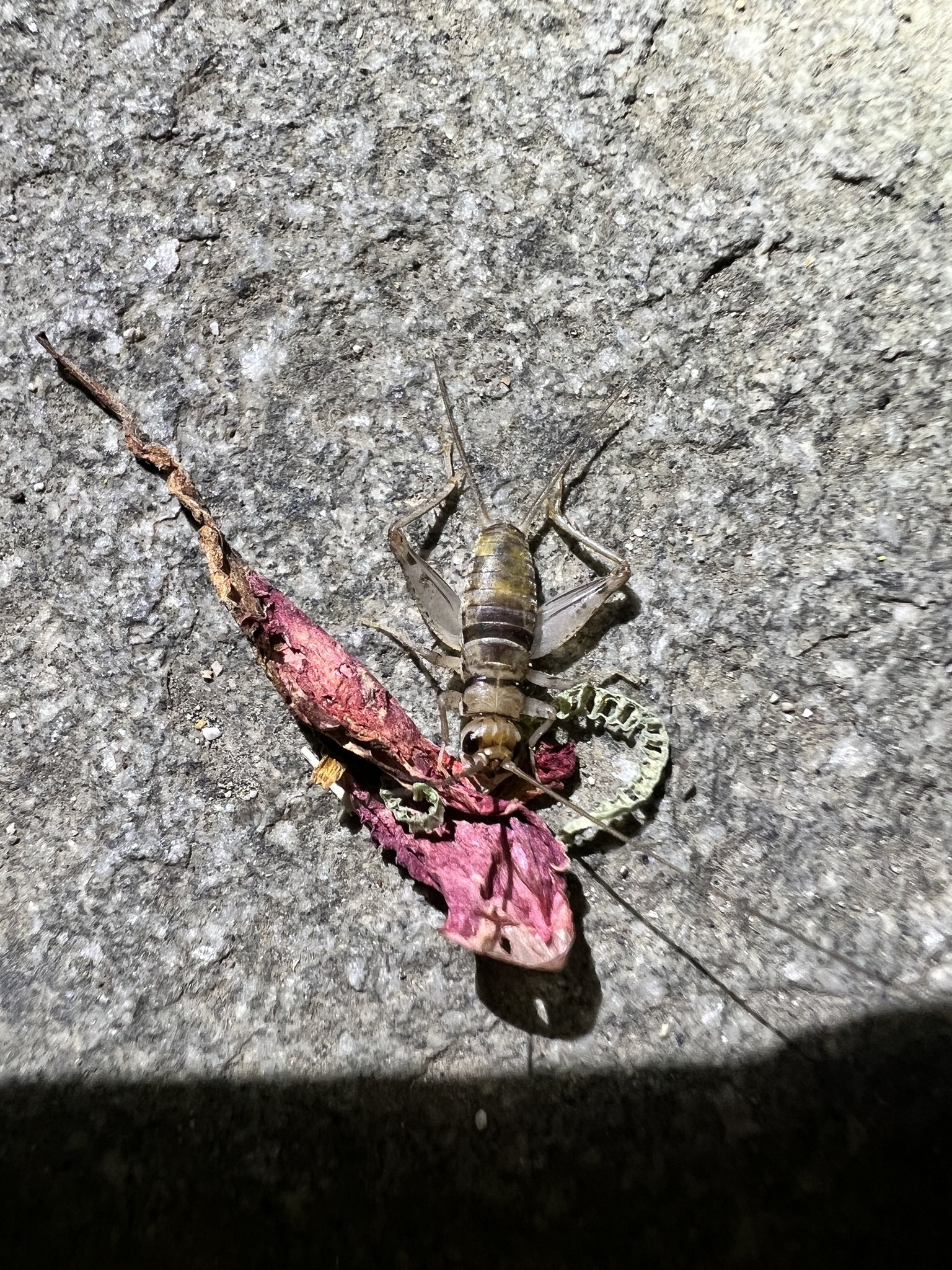
A tropical house cricket on grey ground
On grey ground against a rough cement wall in Lombok, a cricket sat with its long antennae held forward like a pair of scouts. It was light brown with darker markings, a medium-small insect with slender legs, and it stayed completely still while I moved in for a closer look. It took me a moment to place it, because it was not in the kind of place I usually look for crickets.
This is Gryllodes sigillatus, the tropical house cricket, a member of the family Gryllidae in the order Orthoptera. The genus Gryllodes is a close relative of the field crickets in Gryllus, but the tropical house cricket has carved out a very different niche: it lives with people. It is one of the most successful cricket species in the world, spread across the tropics by human travel, and it is equally at home in a garden, a drain or a warehouse.
What separates it from its meadow-dwelling cousins is its tolerance for dry, artificial habitats. It is a smaller, paler cricket, and it rarely sings from burrows in the soil. Instead, the males call from cracks in walls and floors, producing a soft, high trill that blends into the background hum of tropical nights. Its diet is just as flexible, ranging from plant matter to crumbs and scraps.
I had seen this species before, but always as a sound in the dark, never as a portrait subject. Getting a good look at one in the daylight made me appreciate how tidy and well-adapted it really is, a cricket that turned human settlement into its own private empire.