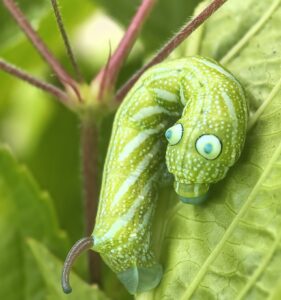
A green caterpillar on a roadside in the eastern Himalaya
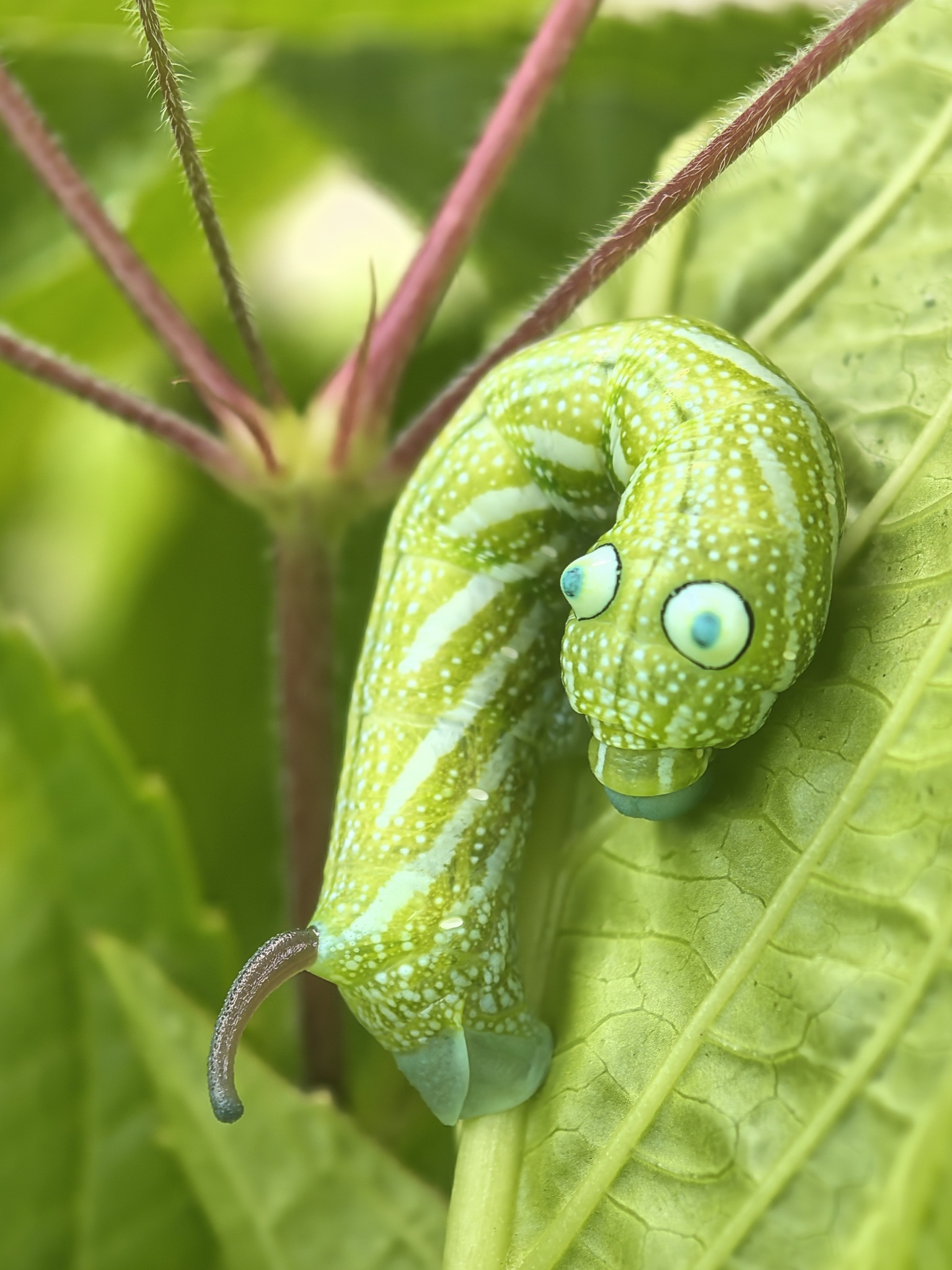
On the evening of June 28, on a roadside in Gelincun village, Beibeng Township, Medog County, Tibet, a plump green caterpillar rested in a coiled posture, its body marked with pale white stripes and spots. Hawkmoth larvae are masters of stillness, and this one held its pose as the camera came close.
This is the caterpillar of Rhagastis albomarginata, a hawkmoth of the family Sphingidae in the order Lepidoptera. The genus Rhagastis, sometimes called the white-shouldered hawkmoths, ranges across tropical and subtropical Asia, and its larvae are typically green with pale markings, blending into the foliage they feed on. The identification was made by the community and has reached research grade. One taxonomic note: GBIF currently treats the name Rhagastis albomarginata Hampson, 1900 as a synonym of Rhagastis confusa Rothschild & Jordan, 1903, and opinions differ between databases; this article follows the name accepted by the iNaturalist community.
Seen this close, a hawkmoth caterpillar is a study in camouflage: smooth green skin, pale stripes that break up its outline, and a coiled posture that makes it look more like a curled leaf than an insect. In the Himalayan foothills of Medog, where forest meets farmland, such caterpillars are a quiet sign that the night-flying adults are around, visiting flowers that few people ever see.
Interesting find! The taxonomic note caught my eye – GBIF treats Rhagastis albomarginata as a synonym of R. confusa, while iNaturalist keeps them separate. Do the two differ mainly in adult wing pattern or also at the caterpillar stage, and which name do you think is more likely to be accepted in the long run? Also, do you happen to know what host plants the larvae feed on around Medog?
Good eye. Short version: GBIF and iNaturalist disagree mainly because the database backbones are out of step, not because there is a real dispute among specialists. GBIF (via the Catalogue of Life) still follows an older arrangement that sinks Hampson’s 1900 albomarginata into R. confusa. The current treatment, the 2024 revision of the Chinese Rhagastis (Insects 15:359, with Ian Kitching among the authors, DOI 10.3390/insects15050359), keeps R. albomarginatus (Rothschild, 1894) and R. confusa as separate species, and even splits several former subspecies into full species (dichroae, chinensis, aurifera and others). iNaturalist has moved to that newer taxonomy, which is why we kept albomarginata.
The separating characters are essentially all adult ones: wing pattern (confusa tends to be a plainer gray-brown with no pale oval patch across the postmedian area, albomarginatus is the more white-marked ‘white-shouldered’ form), plus genitalia and COI barcodes. I have not seen any published larval character that reliably tells the two apart; both have the typical Rhagastis caterpillar, green with pale speckles and stripes. So a larva photo, ours included, gets you to genus easily, but species is an inference from range plus community consensus. Both species do occur in Tibet, so rearing it to an adult or running a barcode would be the only way to fully settle it.
On hosts: larvae of the albomarginatus group are recorded on Dichroa, Hydrangea and Vitis, and R. confusa on Vitis. Wild Hydrangea, Dichroa and wild grapes all grow around Medog, so the caterpillar almost certainly fed on one of those, but I do not know of a published host record specifically from Medog.