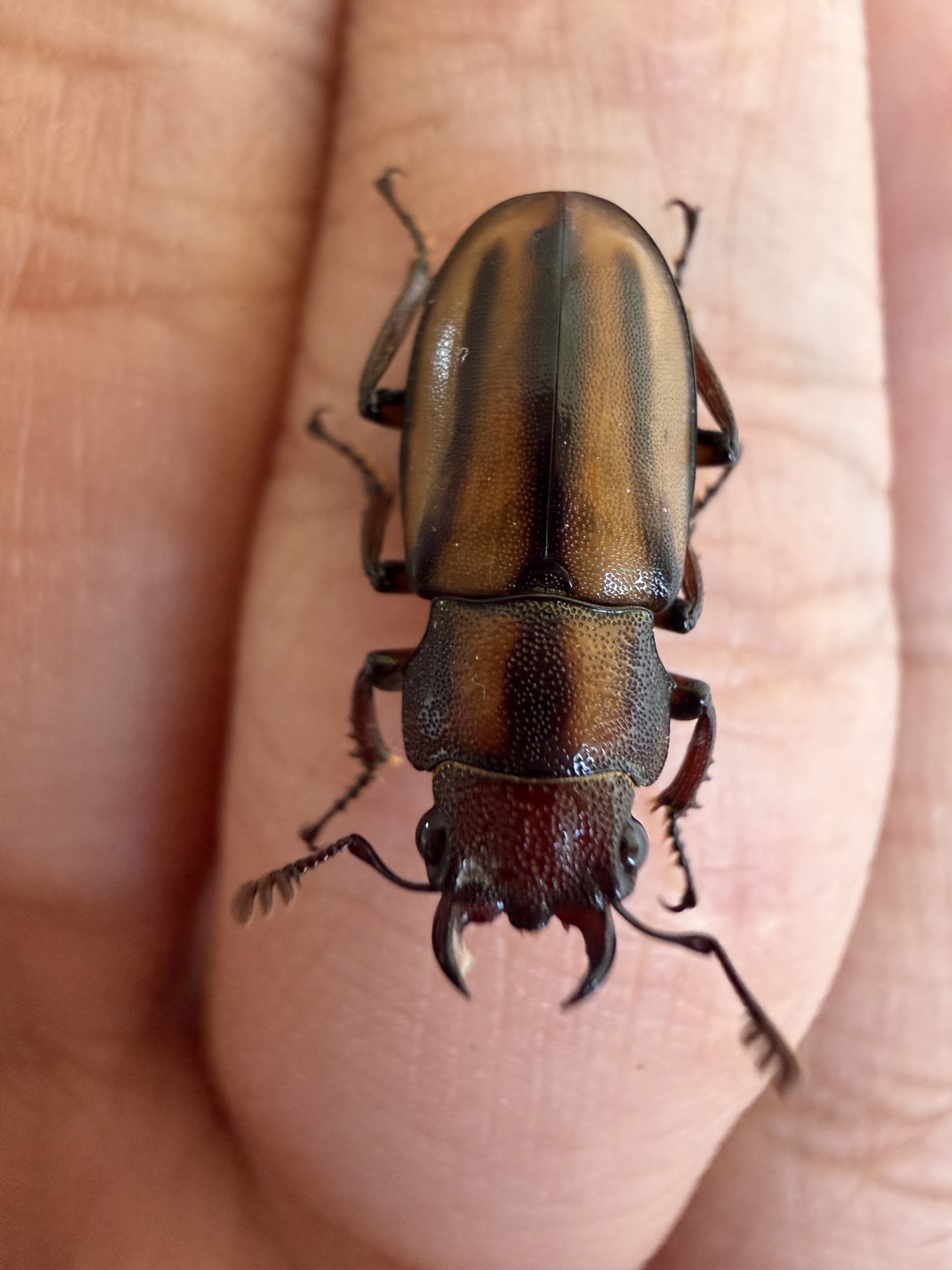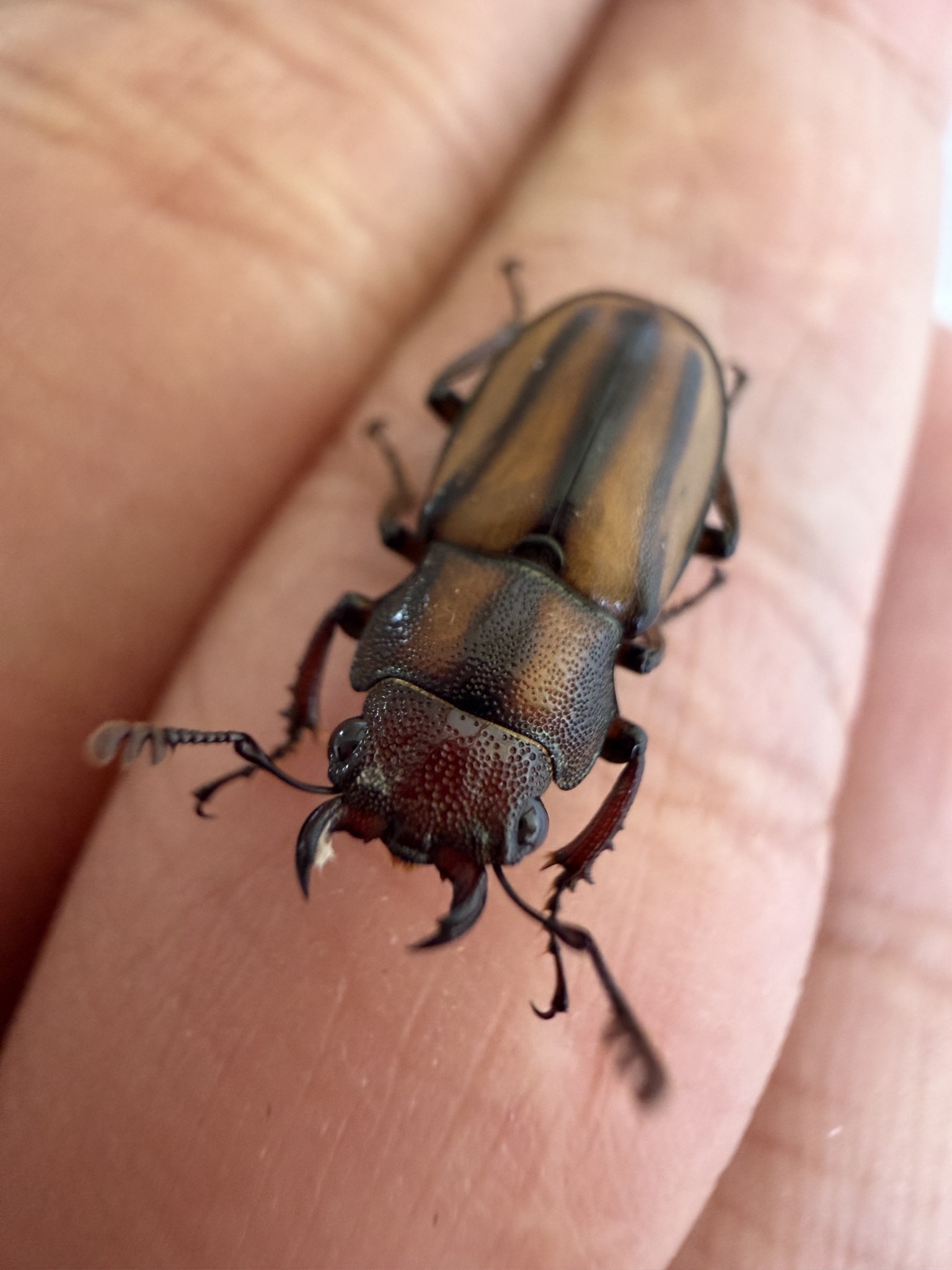
A striped stag beetle in the palm of my hand
On the first of July in Medog, this stag beetle allowed itself to be photographed on my palm. Its body was banded in brown and black, a small red patch marked its head, and a pair of prominent horn-like structures rose in front. It stayed perfectly still, treating my hand as just another branch in its world, and the fine lines of my palm made a strange contrast with its heavy, polished armour.
This is Cyclommatinus assamensis, a member of the stag beetle family Lucanidae in the order Coleoptera. The species name assamensis refers to Assam, the region of northeastern India lying just beyond the mountains where Medog’s forests cling to the southern edge of the Himalaya. The two places share a fauna, and finding an Assam-named beetle here in Tibet felt like a reminder of how thin the borders are for insects.
Like other stag beetles, its larva would have spent a long time inside rotting wood, and the adult lives on tree sap and ripe fruit. The horn-like structures are the beetle’s mandibles, which in males grow into elaborate jaws. For all their intimidating looks, they are used more in shoving contests with rivals than in any serious violence.
Stag beetles have fascinated collectors for centuries, and in China the local species are favourites of the hobby. A beetle like this, calm in an open palm yet built like a miniature knight, makes it easy to understand the appeal. I set it back on a leaf, and it walked off without once looking back.