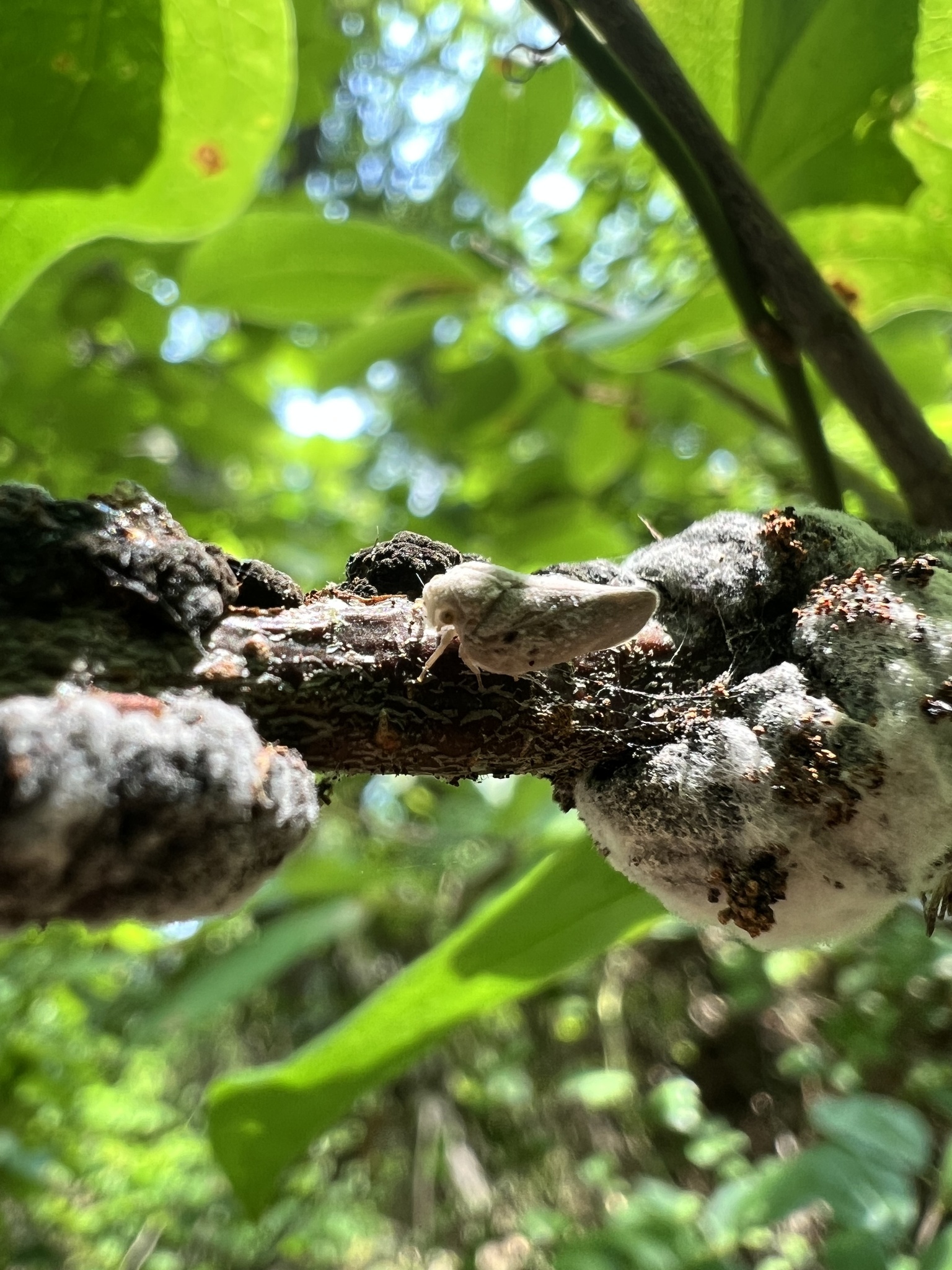
A planthopper dusted with frost
A few steps from the leaf-footed bug, something pale caught my eye. On July 21 in Rhode Island, a small insect sat on a twig looking like a piece of white fluff that had grown legs. It was the kind of find you notice twice: once as a curiosity, and again as an identification. I had to lean in close before I believed it was alive.
It was Metcalfa pruinosa, the citrus flatid planthopper, a member of the family Flatidae in the order Hemiptera. The species name comes from pruina, Latin for hoarfrost, and you can see why: adults and nymphs coat themselves in a fine white waxy powder, and the nymphs even grow tufts of waxy filaments. They look less like insects than like something a spider might have left behind on the twig.
Planthoppers feed on sap with piercing mouthparts, and they process so much of it that they excrete the excess sugars as honeydew, which can attract ants and, in large numbers, support sooty mold on the plants below. Ants, in particular, are known to tend planthoppers for the honeydew, guarding them in exchange for a steady sugar supply. Native to the Americas, this species has also become an unwelcome guest in Europe, where it arrived in the 1970s and spread widely on ornamental plants.
That waxy coat is more than a fashion statement. It sheds water, and the powdery fluff seems to make the insect unappealing to small predators. Frost on a hot July day, sitting quietly on a twig and refusing to melt.