A leaf-footed bug built for quiet battles
On July 21, in a weedy field in Rhode Island, a big, brown insect landed on a stem a few feet ahead of me. It sat there sizing me up for a long moment, then sidled around to the other side of the stem as if to say the conversation was over. The day had been full of small encounters, but this one seemed in no hurry to leave.
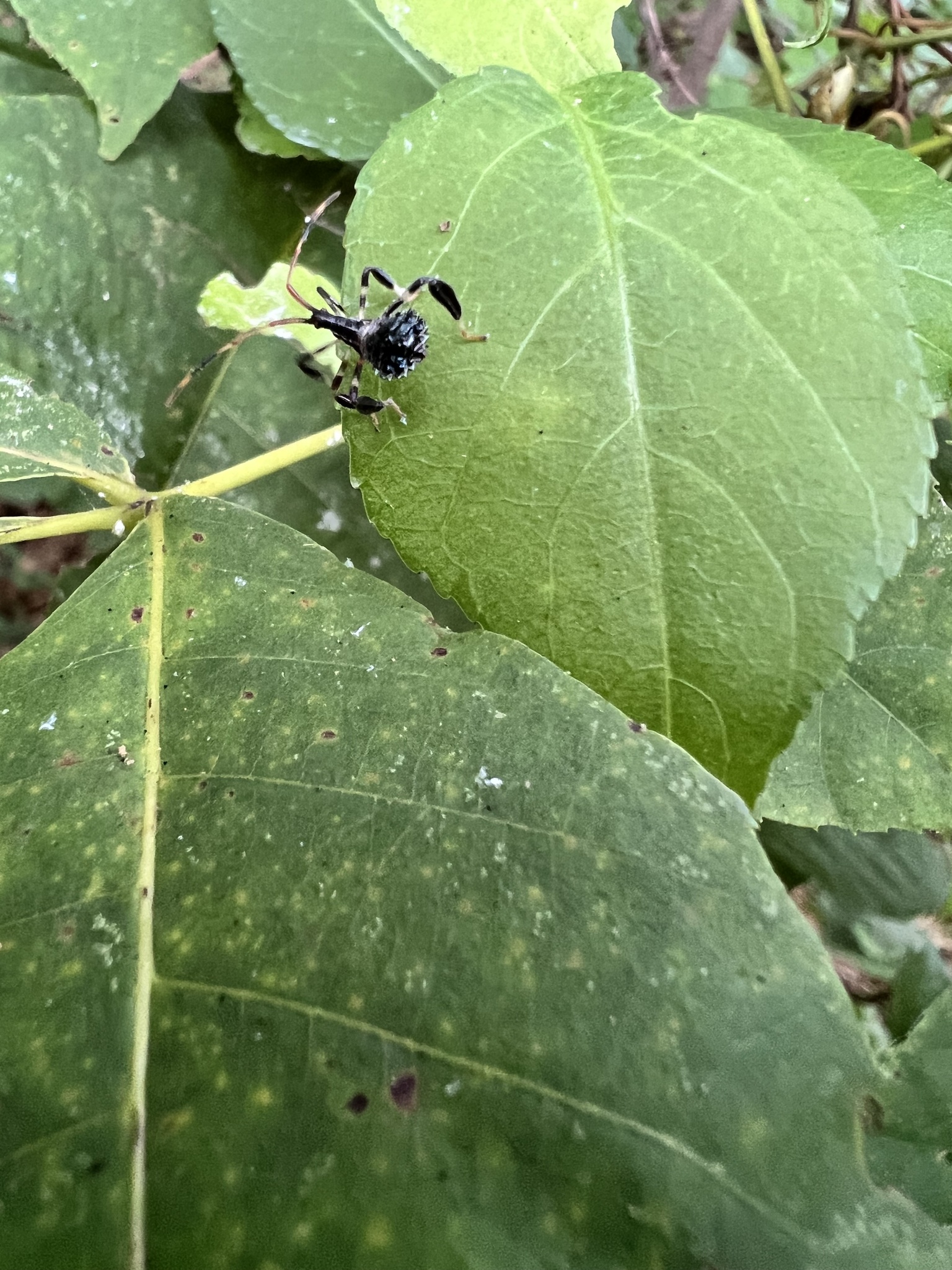
It was Acanthocephala terminalis, a leaf-footed bug in the family Coreidae, order Hemiptera. The family gets its name from the flattened, leaf-like expansions on the hind legs, which are hard to miss on a bug this size. The genus name is Greek for “spiny head,” and the species name, terminalis, “of the end,” suits the way those hind legs finish in broad, expanded plates.
Like most coreids, it feeds by piercing plant stems and sucking the sap with a slender beak that folds under the body when not in use. Gardeners sometimes grumble about them, but a few sap-sucking bugs in a wild field are hardly a disaster. They are also food for a whole chain of predators, from ambush bugs to birds, which keeps their numbers honest.
Here is the fun part. Those oversized hind legs are not just decoration. Males of several Acanthocephala species use them in shoving matches over territory and mates, and they can deliver a surprisingly firm kick for an insect. A bug with attitude, dressed in otherwise plain brown, and all the better for it.