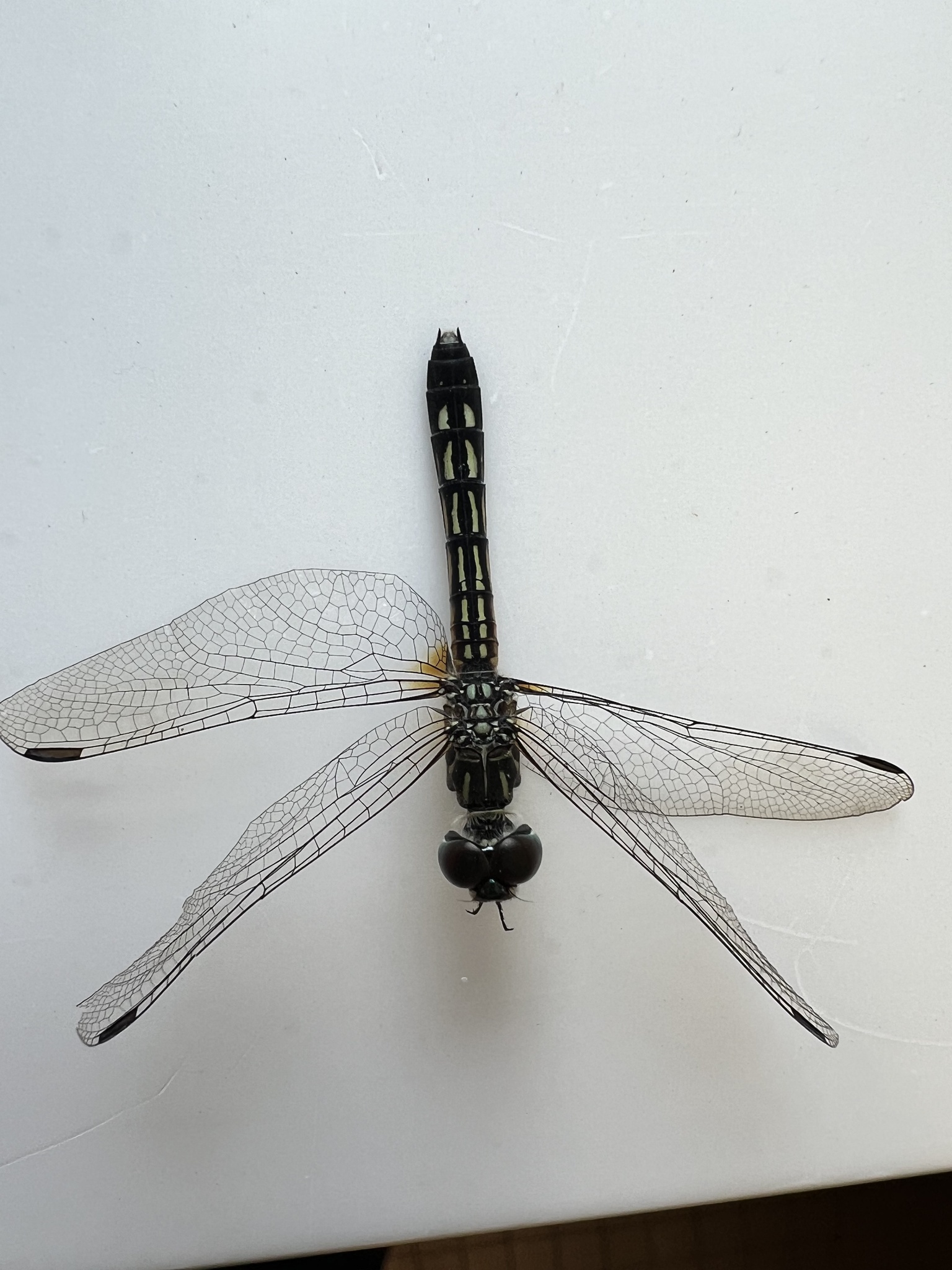
A blue dasher on sentry duty
By mid-July in Rhode Island, every pond has its resident dragonflies. On July 20 I found one that refused to leave its post: it perched on a bare twig over the water, launched after anything that flew past, and came back to the same spot every time, like a tiny fighter jet with a favorite parking spot. The wings beat in a rhythm that looks almost lazy from a distance, but the dasher can change direction faster than the eye can follow.
It was Pachydiplax longipennis, the blue dasher, a skimmer in the family Libellulidae, order Odonata. Mature males develop a powdery blue abdomen, and the thorax carries pale stripes; females and young males stay tan and brown, which is why the same species can look like two different insects depending on the season.
The common name fits the behavior: dashers dart out from a perch, snap up a gnat or mosquito, and return to the same twig. Skimmers are among the most familiar dragonflies in North America, and the blue dasher is one of the commonest of all, at home around still water from ponds to marshes. They hunt by sight, and their enormous compound eyes give them some of the best vision in the insect world.
Dragonflies get a bad rap in folklore, but they cannot sting and they are spectacular mosquito control. Watching this one work the pond was better than any bug zapper, and far prettier. The species name longipennis just means “long-winged,” which seems like an understatement for an insect that flies as if it owns the air.