A green singer that gave up long wings
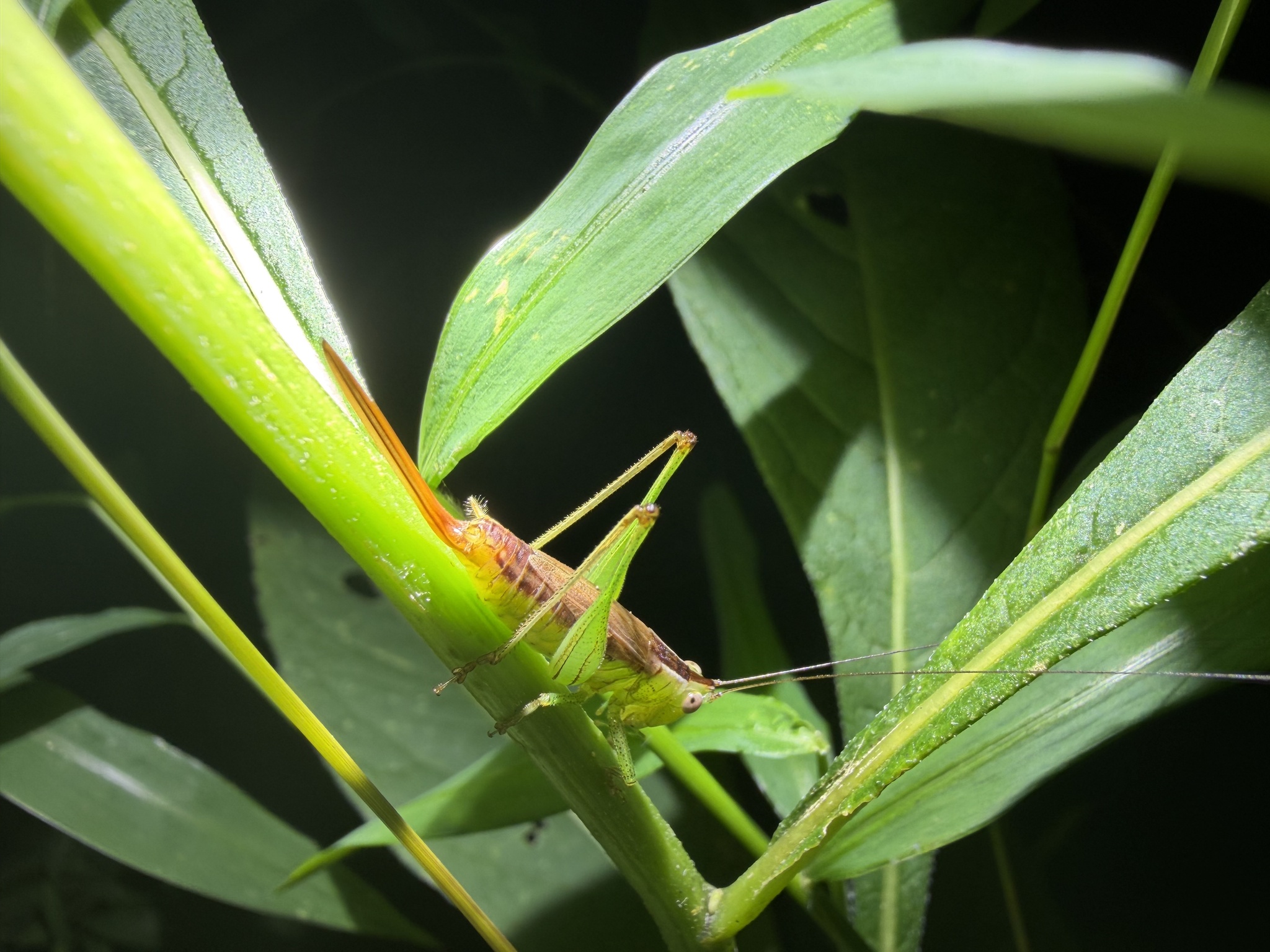
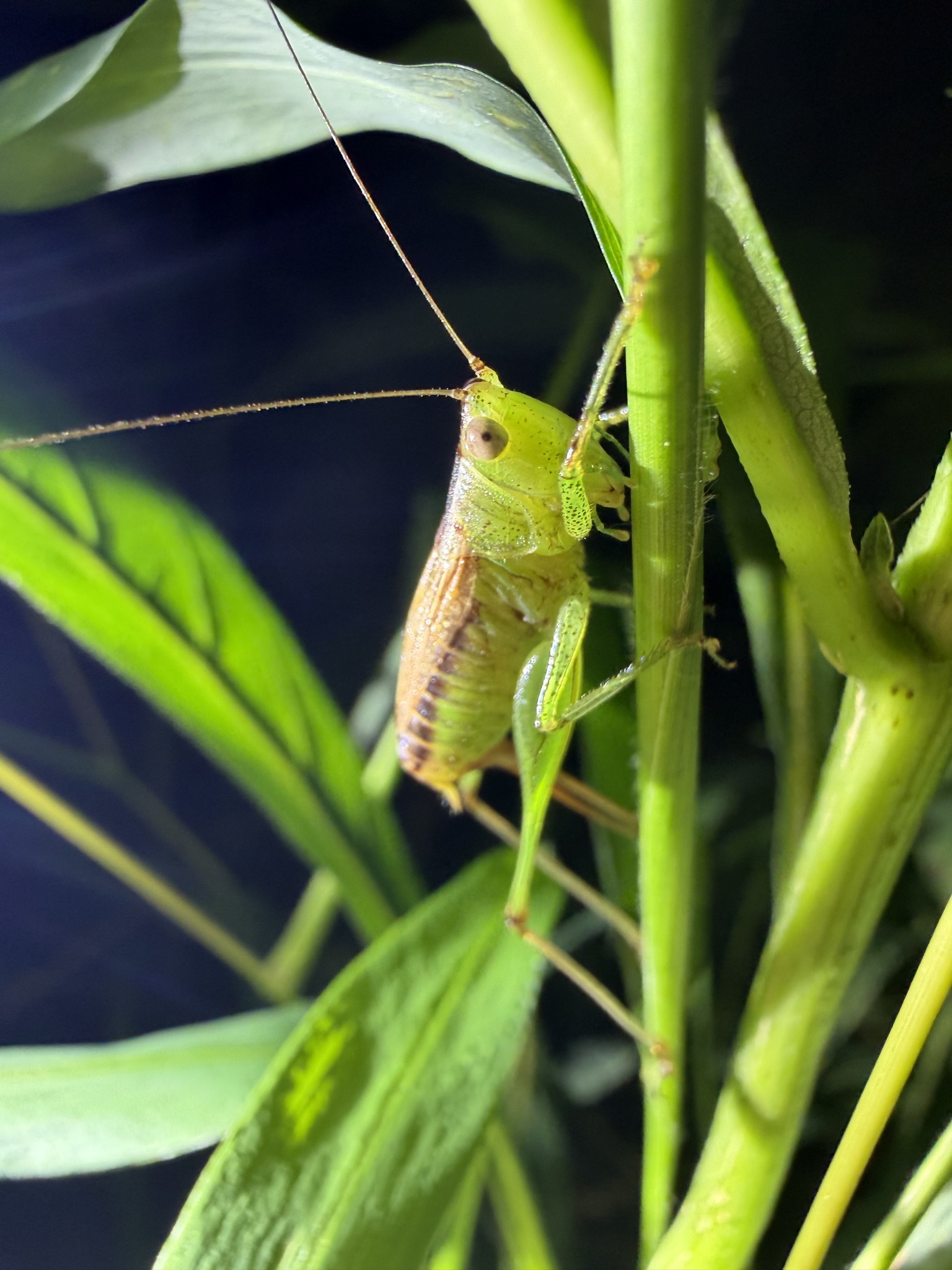
On August 28, a bright green katydid was gripping a plant stem near the senior school in Fox Chapel, clinging vertically with its hind legs while its long antennae swept the air. Its body was a vivid grass green with brownish markings along the abdomen, and its wings lay folded neatly along its back, shorter than I would have expected for a katydid. It held its ground as I moved in, more curious than alarmed, and let me take a close look before it decided I was not interesting enough to fly from.
This is Conocephalus brevipennis, the short-winged meadow katydid, a member of the katydid family Tettigoniidae in the order Orthoptera. The species is found across North America, common in grassy fields, weedy edges, and meadows. The species name brevipennis means “short-winged,” and true to the name its wings are shorter than those of most meadow katydids, a trait shared across its genus. This individual is identified to species, awaiting community confirmation.
Meadow katydids are singers. Males rub their forewings together to produce a soft, raspy buzz at dusk and into the night, each species with its own rhythm, and the short-winged meadow katydid is no exception, though its song is easy to miss among the louder members of the chorus. They feed on grasses and soft plant tissues, and they are plentiful enough that most people hear them all summer without ever seeing one.
What I liked about this one is how it committed to the name: it had the option of flight and chose to sit, wings folded, letting camouflage do the work. In a field full of green stems, a green body is the best invisibility a small insect can buy, and it was working perfectly until I happened to look closer.