A leaf that got up and walked
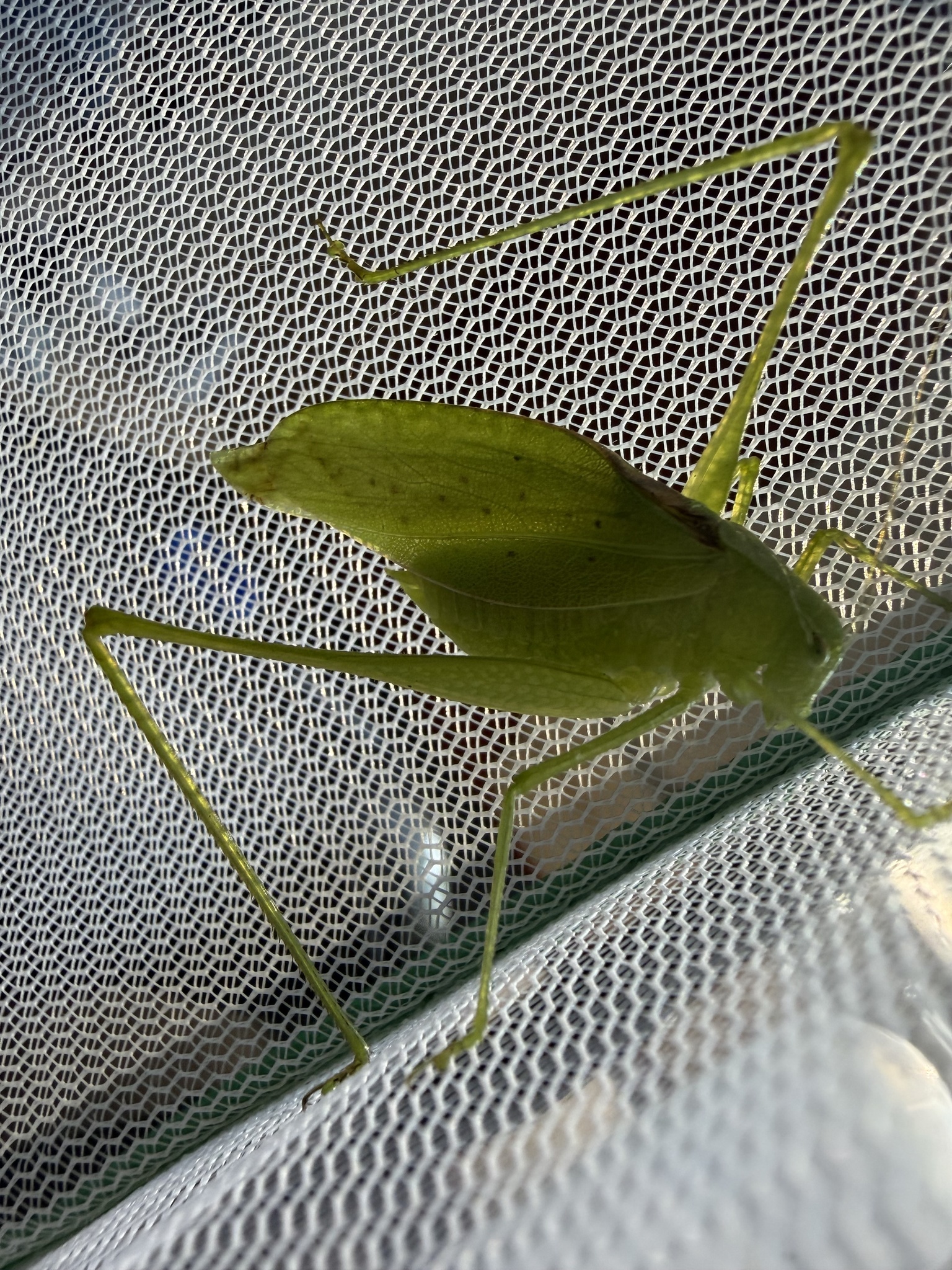
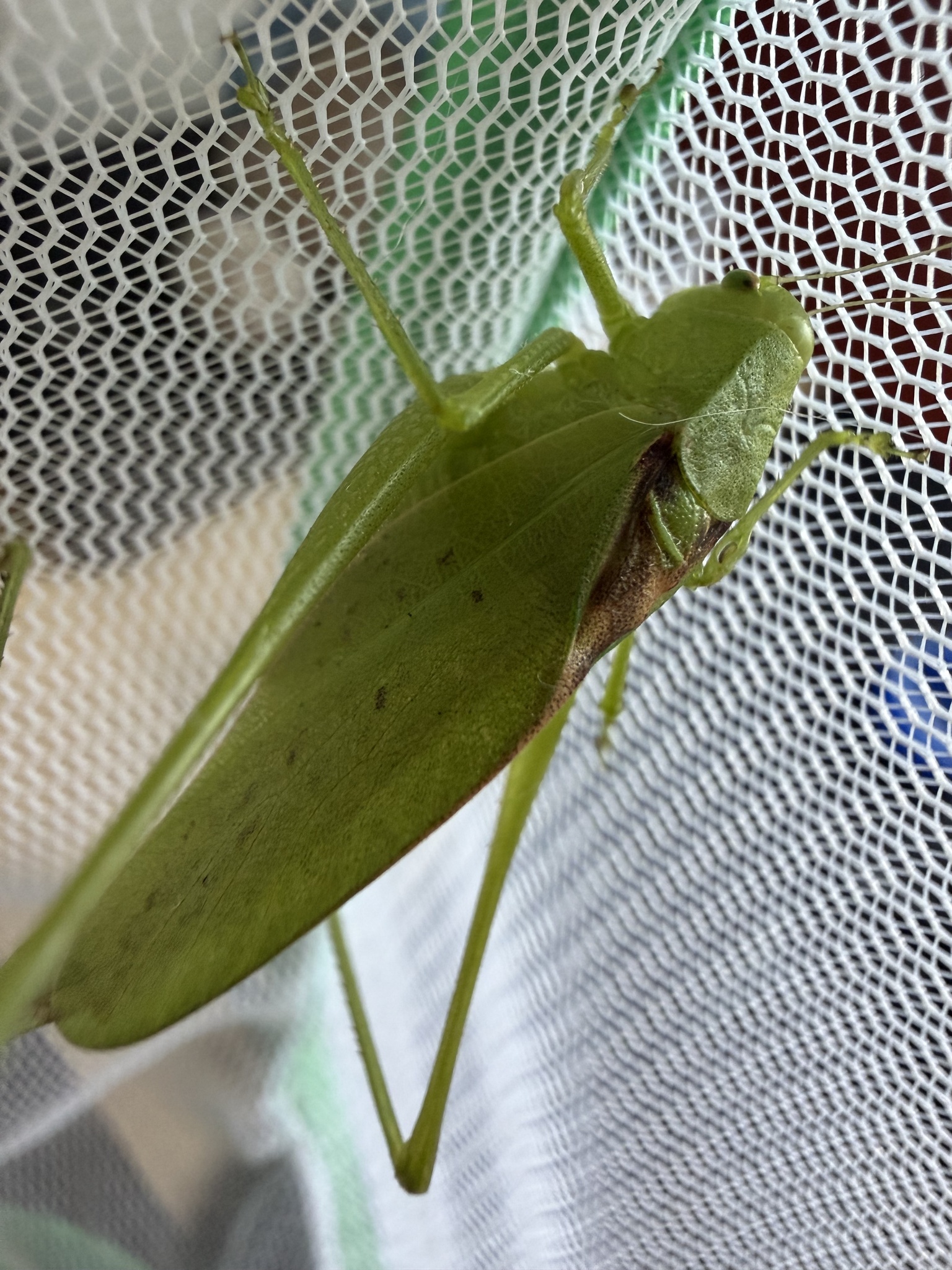
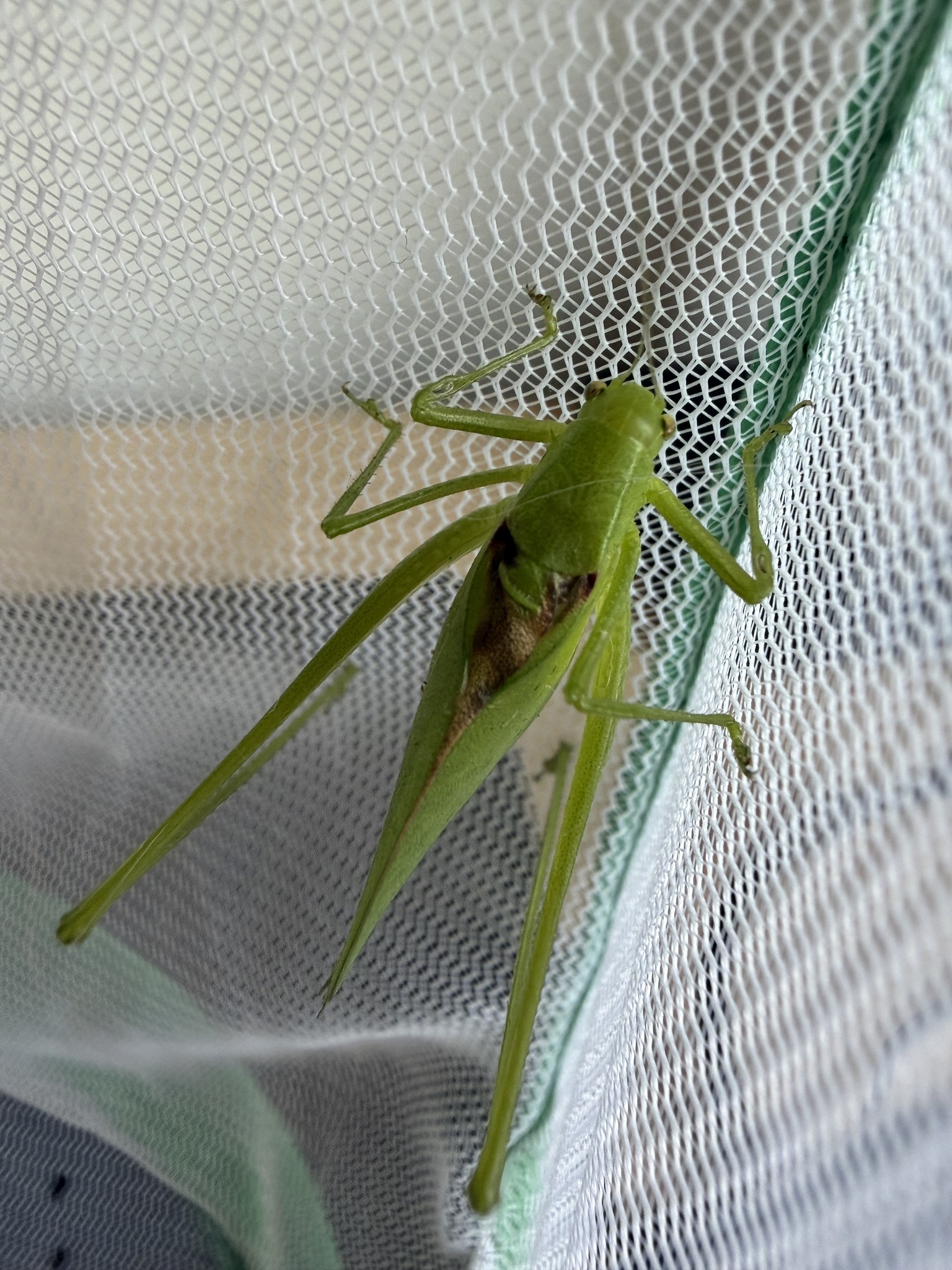
On August 29, a katydid was resting on a window screen at the Shady Side Academy campus in Fox Chapel, outside Pittsburgh. It was a perfect green, with wings shaped so exactly like leaves that it took a moment to register as an animal at all. The long antennae gave it away, sweeping forward like two delicate threads, and the slender legs held it in the patient stillness that katydids do so well.
This is Amblycorypha oblongifolia, the oblong-winged katydid, a member of the family Tettigoniidae in the order Orthoptera. It belongs to the subfamily Phaneropterinae, the broad-winged or false katydids, which are mostly green and rely on leaf-mimicking camouflage. The species ranges across eastern North America, where it lives in the understory of deciduous woods, in shrubs and tall grass, often near wetter ground, and is regularly found on goldenrod and along hedgerows and field edges. This individual was identified to species level and is awaiting community confirmation.
Its diet is strictly plant matter, leaves and flowers of broadleaf herbs and woody plants, and it shows no interest in grasses or sedges, a feeding pattern shared across its subfamily. In feeding trials it has been recorded accepting jewelweed, goldenrod, arrowhead, and wild grape, among others. It is not considered a pest of any crop.
The species name oblongifolia means “oblong-leaved,” and it refers to the shape of the wings rather than a plant: the closed forewings are drawn out and rounded at the tip, a near-perfect imitation of a small leaf. On late summer nights, males of this species call from the foliage by rubbing their wings together, and in many of its relatives the female answers with a short tick of her own, the two building a duet across the dark. A green leaf that got up and walked, singing when the light goes.