The voice of late summer, loud and unhurried
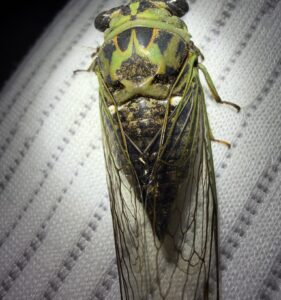
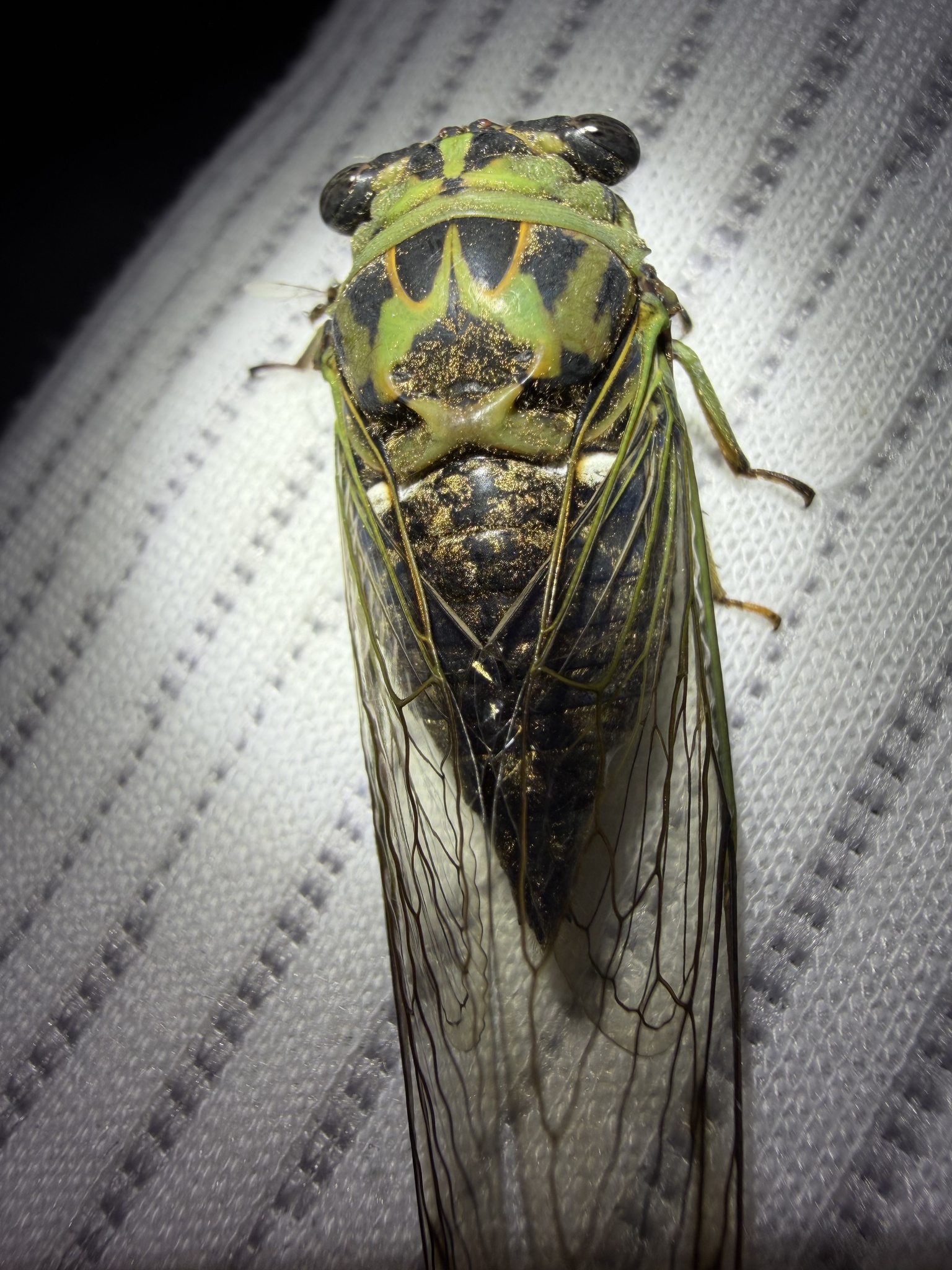
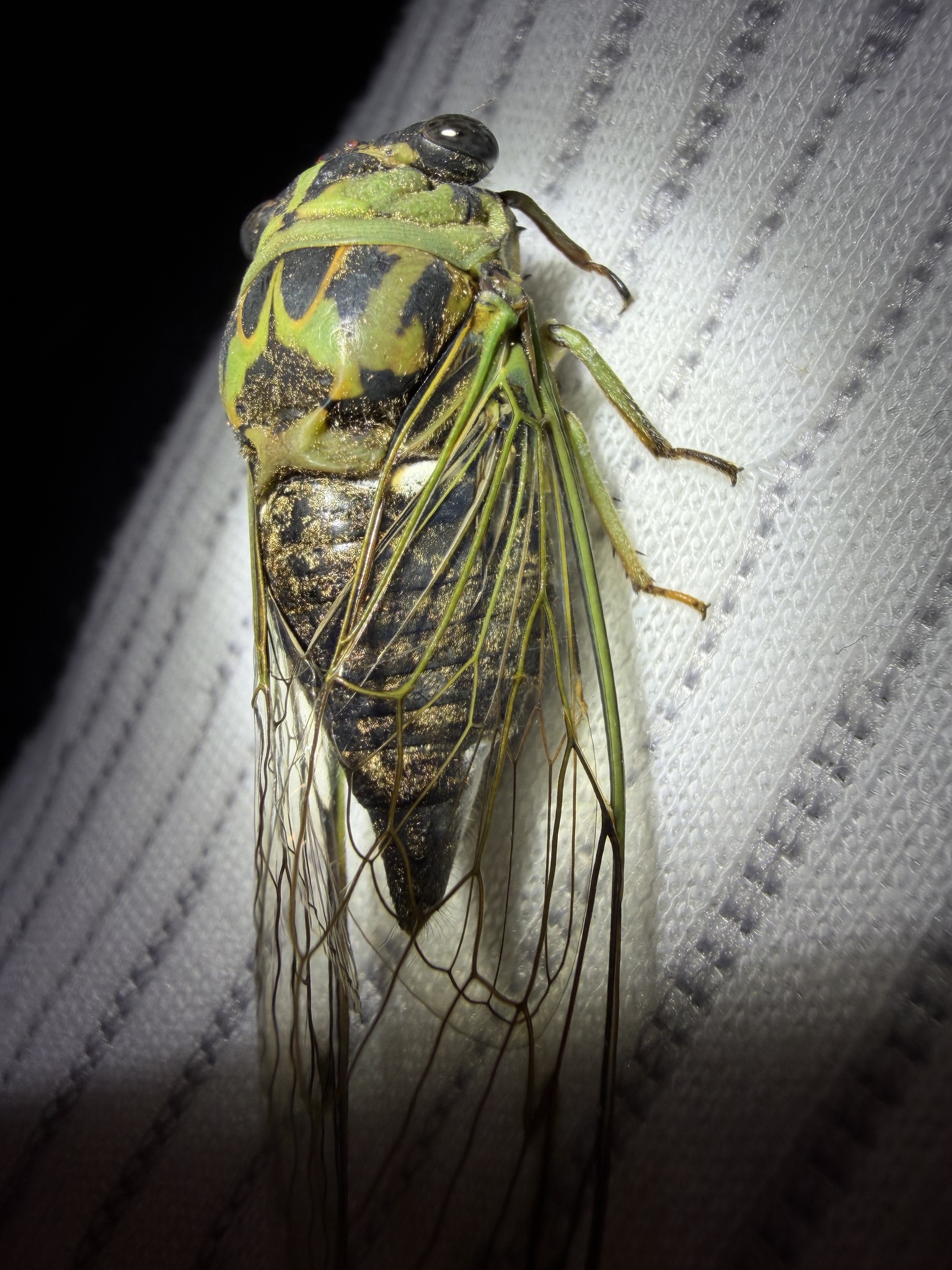
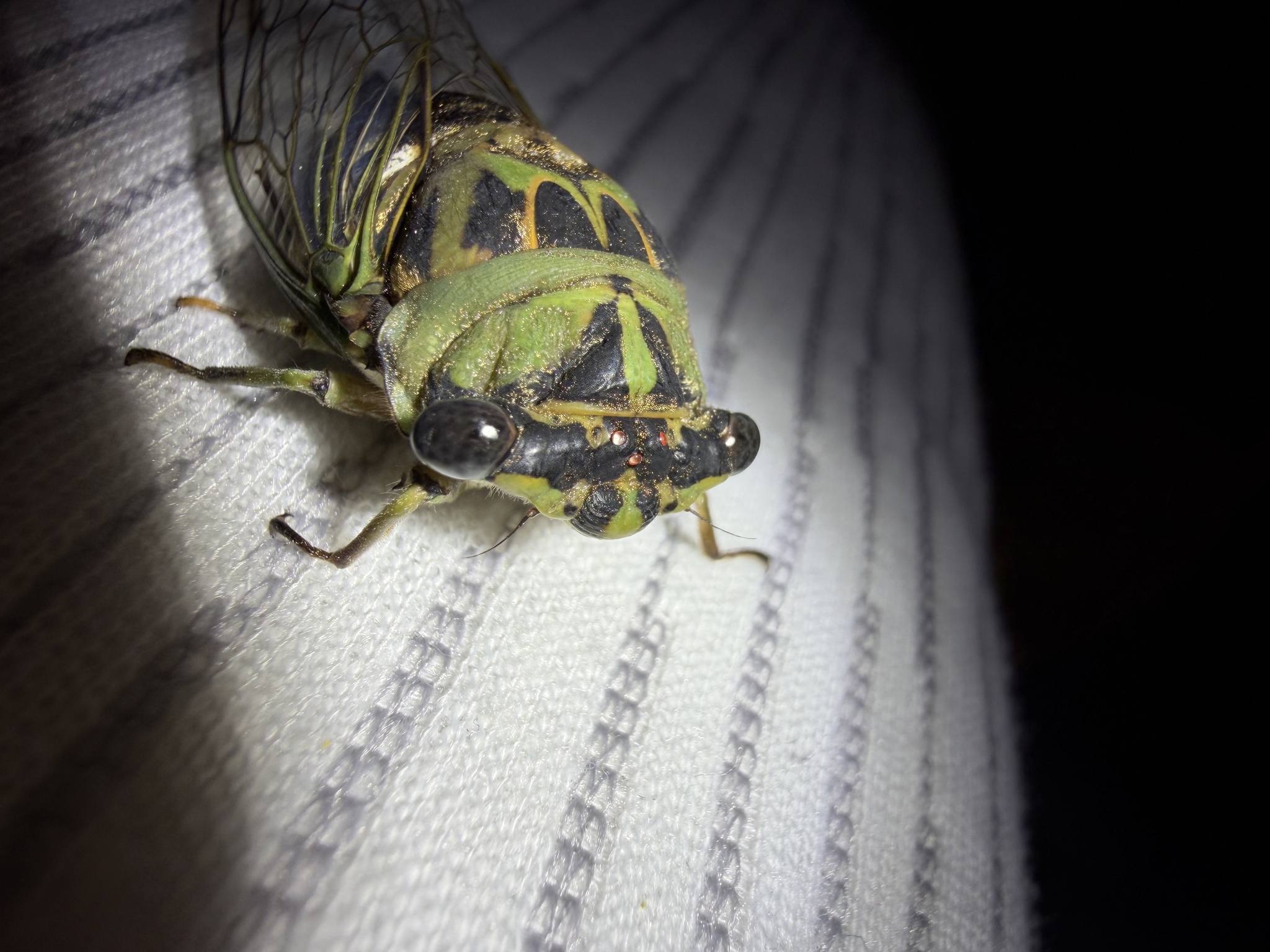
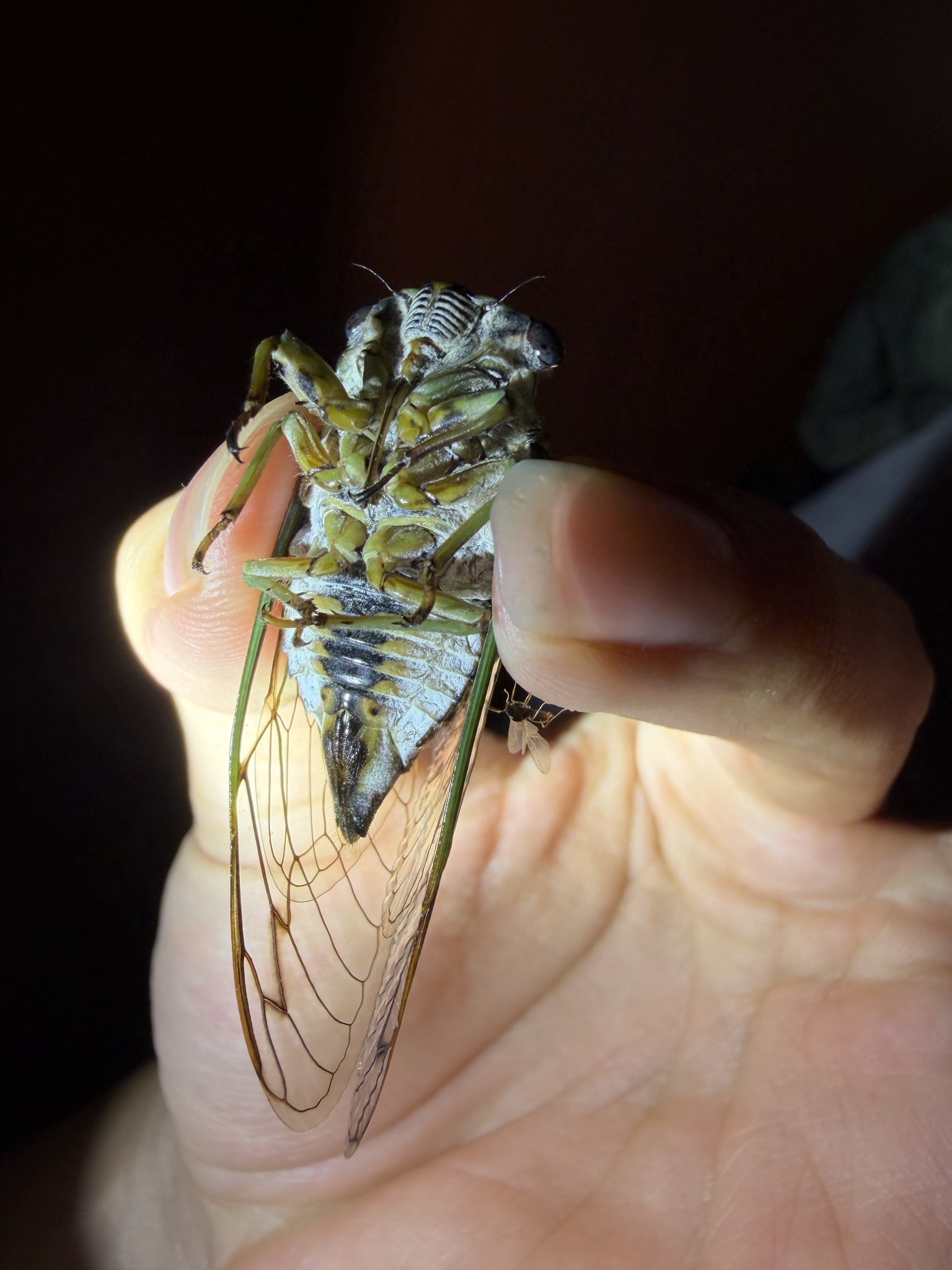
On the last day of August, in Fox Chapel, a cicada was clinging to a tree near the school campus, its black body patterned with green and yellow markings and its transparent wings spread with dark veins like stained glass. It sat completely still, unbothered by the camera, doing what dog-day cicadas do best: nothing, loudly, all summer long.
This is a member of the genus Neotibicen, the dog-day cicadas, in the family Cicadidae of the order Hemiptera. The genus was erected in 2015 by Max Moulds and Kathy Hill, splitting the old North American Tibicen into several groups. The common name comes from the “dog days” of late summer, the hottest stretch of the year, which is exactly when these cicadas sing. The black body with green markings and the clear, dark-veined wings are typical of the group.
Like other cicadas, Neotibicen nymphs spend years underground feeding on tree roots, then emerge as adults for a few weeks of singing and breeding. The males produce the familiar droning buzz with their tymbals, vibrating membranes on the sides of the abdomen, and the chorus of late August is one of the defining sounds of a Pittsburgh summer. This individual is identified to genus level, awaiting community confirmation before a species-level name can be given.
There is something reassuring about the dog-day cicada. Its song marks the turning point of the season, the long stretch of heat that carries summer into its final weeks. For an insect that spends years in the dark before its brief, noisy adulthood, it certainly makes the most of the daylight.
Nice write-up! I hear these buzzing every afternoon here in late summer, but I always assumed it was just one species. How do you tell the different Neotibicen species apart by their songs, or is it mostly by looking at the markings?
Both work, but song is honestly the more reliable way. Every Neotibicen species has its own call, so once you have heard a couple side by side they are surprisingly easy to tell apart by ear. Around here in late summer you are mostly hearing Neotibicen canicularis, the true dog-day cicada, which does that long steady drone that rises and falls like a slow siren. The other common one in the region is the scissor-grinder (N. tibicen), a faster, raspier buzz that genuinely sounds like someone sharpening scissors. Markings are a decent backup: canicularis is black with green markings and greenish wing veins, while tibicen shows a frosty white bloom (pruinosity) over the thorax. The one in this article is still sitting at genus level because the photos do not nail every angle, but given the late-August timing my guess is canicularis.