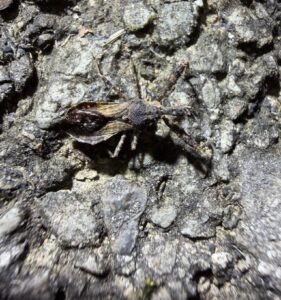
A patient ambusher armed with spiny legs
On August 30, in the school grounds at Fox Chapel outside Pittsburgh, a slender, dark insect sat motionless on a low stem, so still that it looked like a stray fleck of dried vegetation. Up close it showed its true colors: an elongated dark brown body, long legs, and a wary head that tracked the camera lens. It was an assassin bug, waiting out the afternoon in the one pose it knows best.
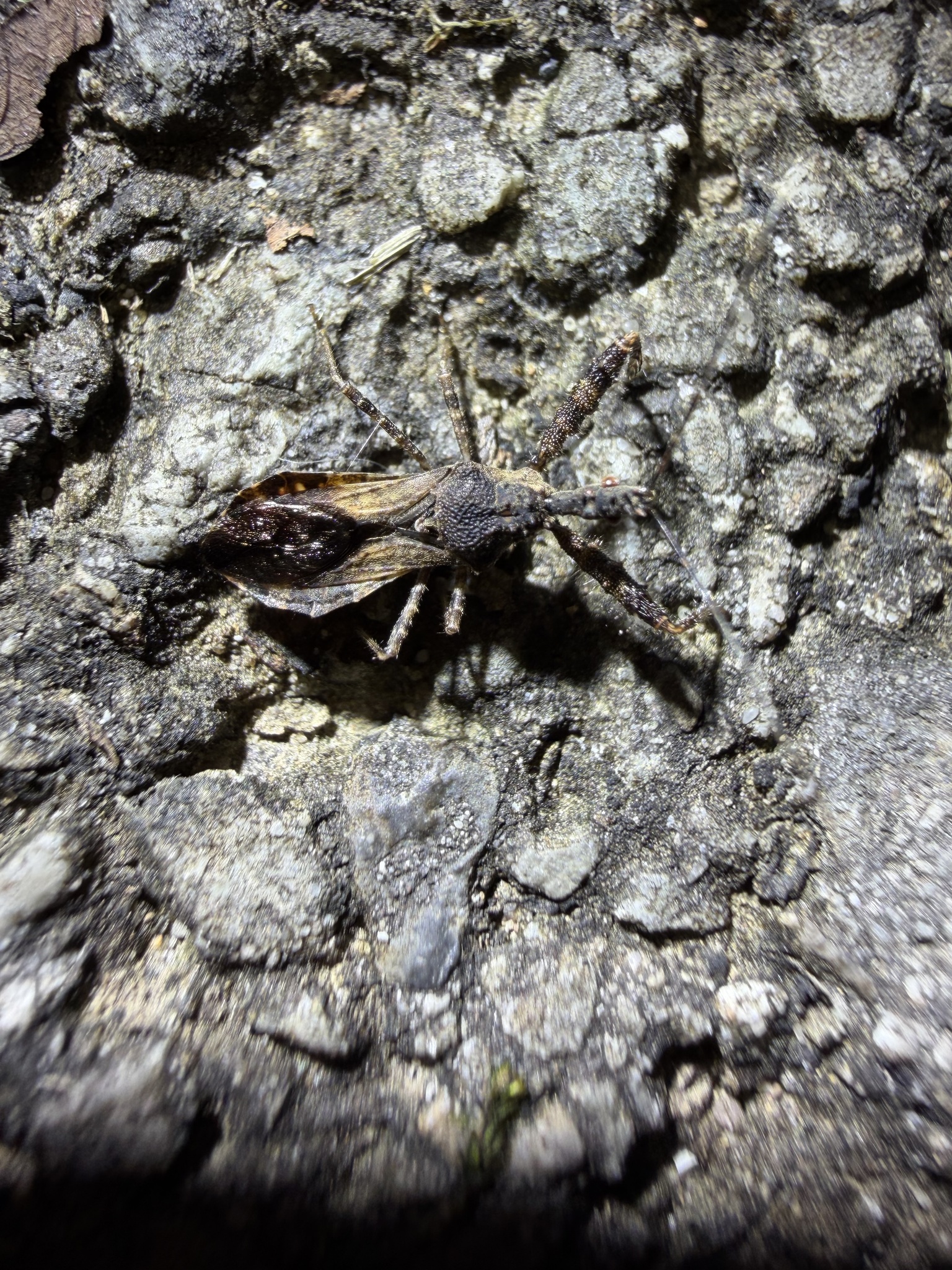
This is Sinea spinipes, the spiny assassin bug, a member of the family Reduviidae in the order Hemiptera. The identification is made from photographs and is awaiting community confirmation. Sinea is a North American genus of ambush hunters, and this species is at home along roadsides, forest edges, and open fields with scattered trees. Like other assassin bugs it does not chase its food; it sits and waits, then strikes with a short piercing beak, the rostrum, injecting enzymes that dissolve the prey from within before it is drained dry.
What makes this hunter distinctive is written in its name: spinipes means “spiny-footed,” from the Latin spina (thorn) and pes (foot). The long legs carry rows of spines that help it seize and hold struggling prey, a built-in grip for a bug that must win its meals in a single sudden lunge. Its narrow build lets it disappear among stems and leaf edges, which is exactly how it caught my eye only at the last moment.
Gardeners have reason to like these quiet predators: they feed on the small insects that damage plants, doing their pest control one ambush at a time. This one never moved a leg during our whole encounter, and by the time I left, it was still there, patient as the afternoon itself.
Nice find – that patient ambush pose comes through well. How do you separate Sinea spinipes from Sinea diadema in photos: is it the shape and spacing of the spines on the front legs, or more the proportions of the head and pronotum? Also wondering whether those leg spines are purely for gripping prey or if they double as camouflage while it sits among stems.
On photos it comes down mostly to the armature. diadema is the heavier built one: longer and more conspicuous spines on the fore femora, and a pronotum that carries obvious spines of its own, with a head that looks proportionally small against that broader front end. spinipes tends to be slimmer and darker with shorter, stubbier spines and a narrower pronotum. Head and pronotum proportions do help once you have a side view, but the spines are the faster read. That said, both are variable and photos are often ambiguous, which is part of why this record is still sitting at awaiting confirmation. If it matters, what an expert will want is a clean dorsal shot plus a side view of the front legs, and sometimes a specimen.
On the spines themselves, the documented job is gripping. They are the hardware that lets a sit and wait hunter hold onto something actively trying to leave. A crypsis role is plausible, since the spiny outline does break up the silhouette against stems, but I have not seen that tested. I would treat it as a likely side benefit rather than a demonstrated function.