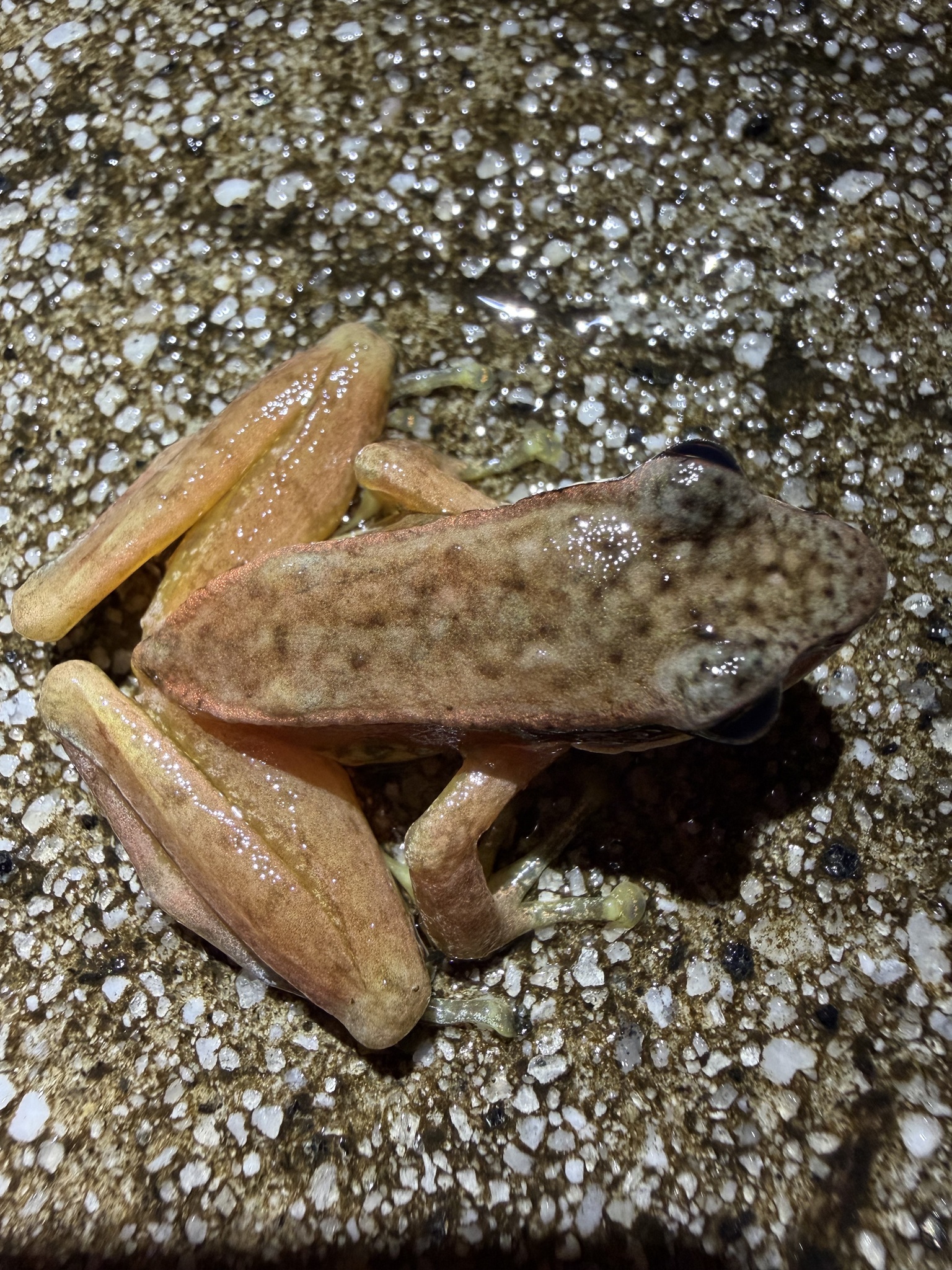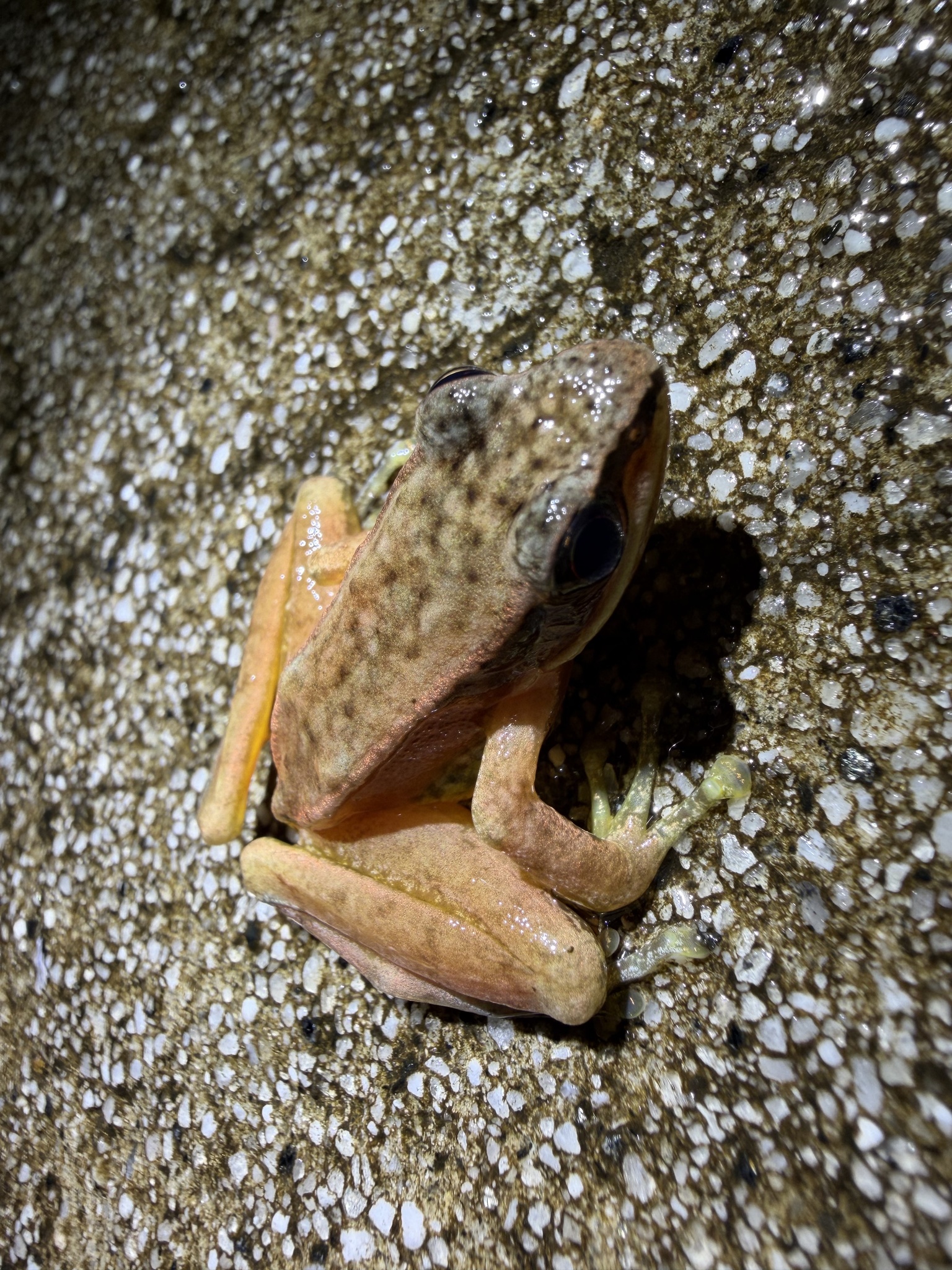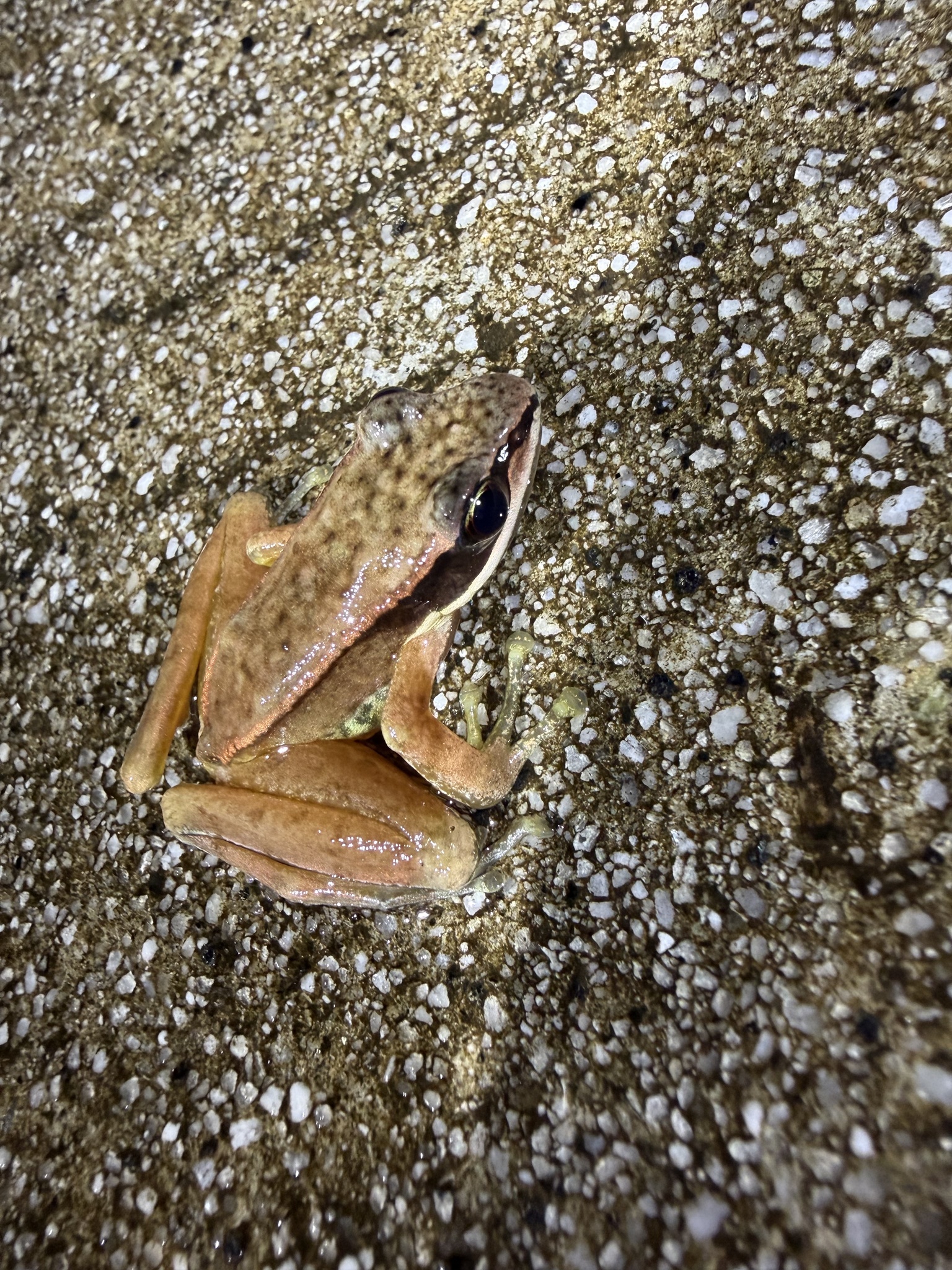
A torrent frog taking a rest between rains
It was the water droplets that caught my eye first, scattered over gravel and dark earth, and then the frog itself: brown with darker blotches, a sturdy body, long strong hind legs folded beneath it. Its eyes sat on top of its head, watching me without a single movement of the body. It sat completely still, trusting the camouflage that made it look like just another wet stone.
This is Amolops nyingchiensis, a frog of the family Ranidae, order Anura. The species name means from Nyingchi, the region of southeastern Tibet where Medog lies, and the genus Amolops holds the torrent frogs of Asia, animals built for life beside fast-flowing mountain streams. Their tadpoles cling to rocks in rushing water with a large sucker on the belly, and the adults are usually found near wet rocks and spray, though in the monsoon they spread out over the whole damp forest floor. Their calls are part of the evening sound of the very streams they live beside.
It is a frog’s version of the same trick the insects of this forest use: stay still, match the background, and let the weather do the moving. In the wet season the line between stream and forest blurs, and frogs like this one make use of every puddle and damp patch. The long legs are for quick escapes, and the blotched back is for disappearing, and both work better than any effort at speed.
I left it among the stones, and it had probably forgotten me before I was out of sight.