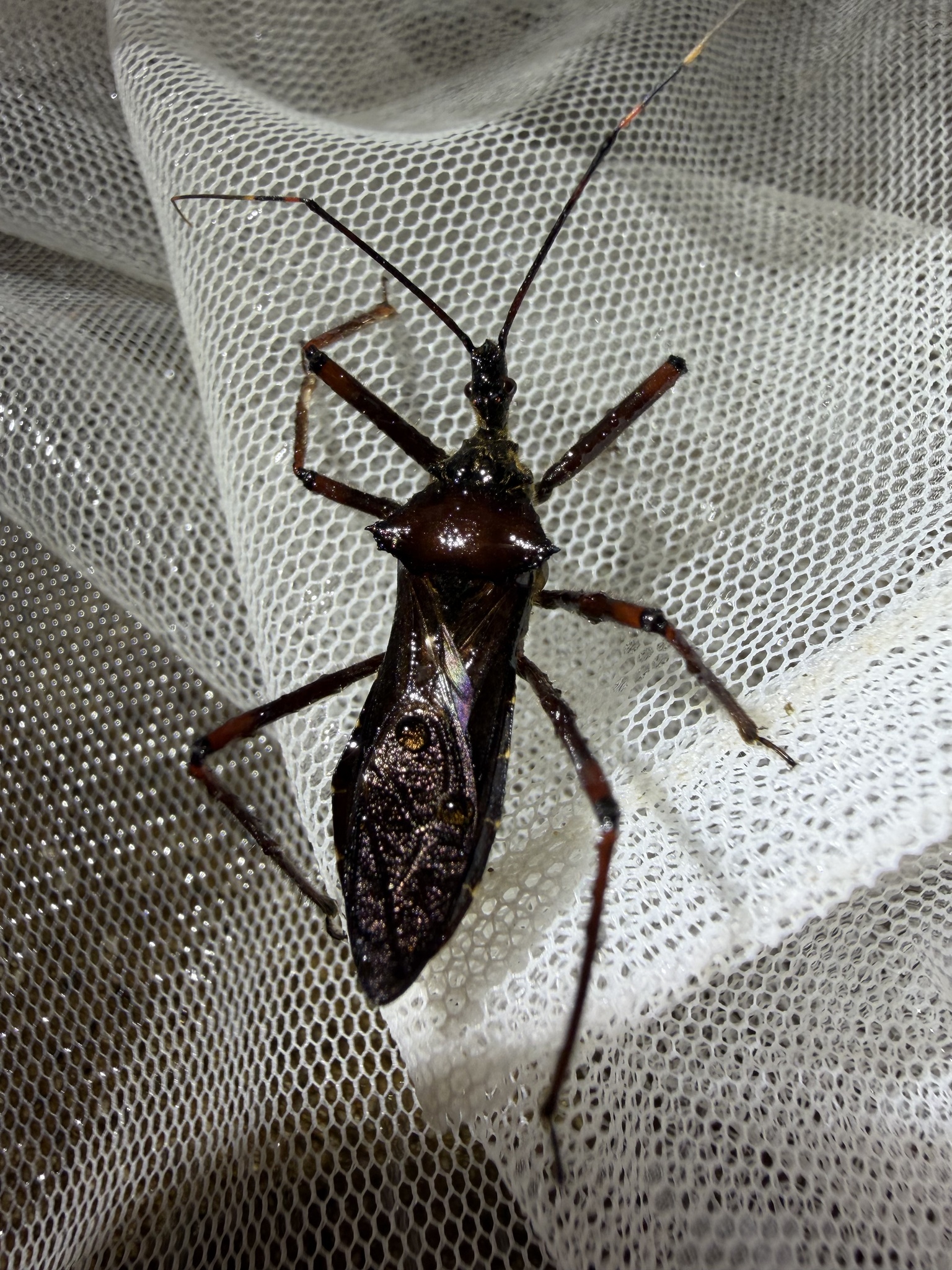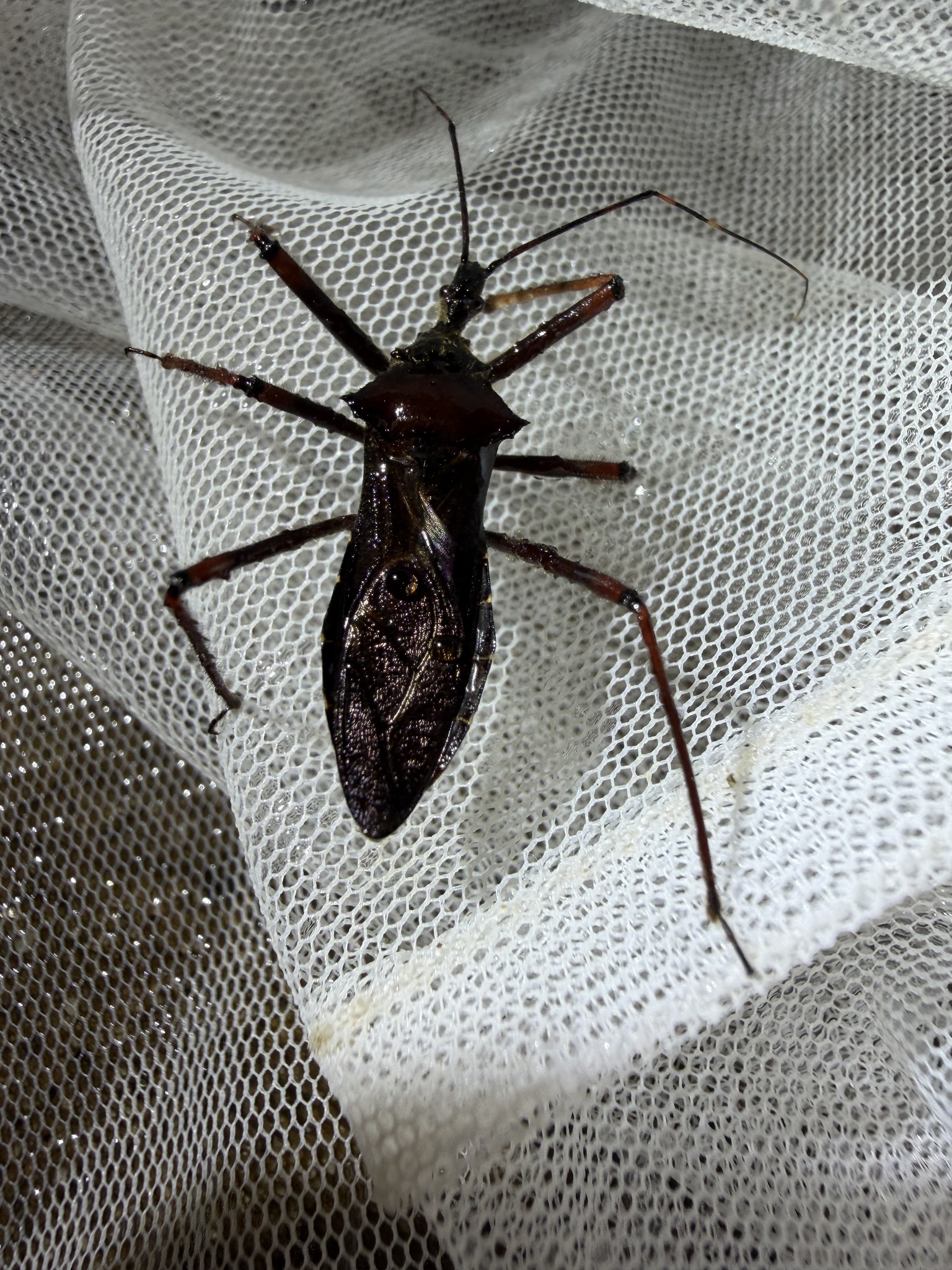
A hairy-legged hunter on white mesh
The white netting was stretched taut, and on it sat a hunter: dark brown, with a patterned back of blotches and spots, slender antennae, and wings that caught the light with a faint violet sheen. It had chosen the mesh as its hunting ground, a vantage point with nothing to hide behind. It watched the world with the stillness of something that never needs to chase.
This is Isyndus pilosipes, an assassin bug of the family Reduviidae, order Hemiptera. The name pilosipes means hairy-footed, a nod to the fine hairs on the legs of this Asian genus of large reduviids; Isyndus is a genus of substantial assassin bugs, among the larger reduviids of Asia. The rostrum, a short curved beak folded beneath the head, is the business end: a quick stab injects saliva that liquefies the prey from the inside, and the bug then drinks the result.
Assassin bugs are the patient hunters of the insect world, and the iridescent sheen on the wings of this one only adds to the impression of something quietly dangerous. The blotched pattern of the back breaks up the outline, useful for a hunter that does its work in the open. Their forelegs are often armed with spines and sticky hairs that help pin struggling prey while the rostrum does its work, and many species are valued in gardens for keeping plant pests in check.
It never stirred while I worked the camera. Somewhere in the forest its next meal was walking around unaware, and I left the netting exactly as I found it; the bug had earned its spot.