A small butterfly with a metallic secret
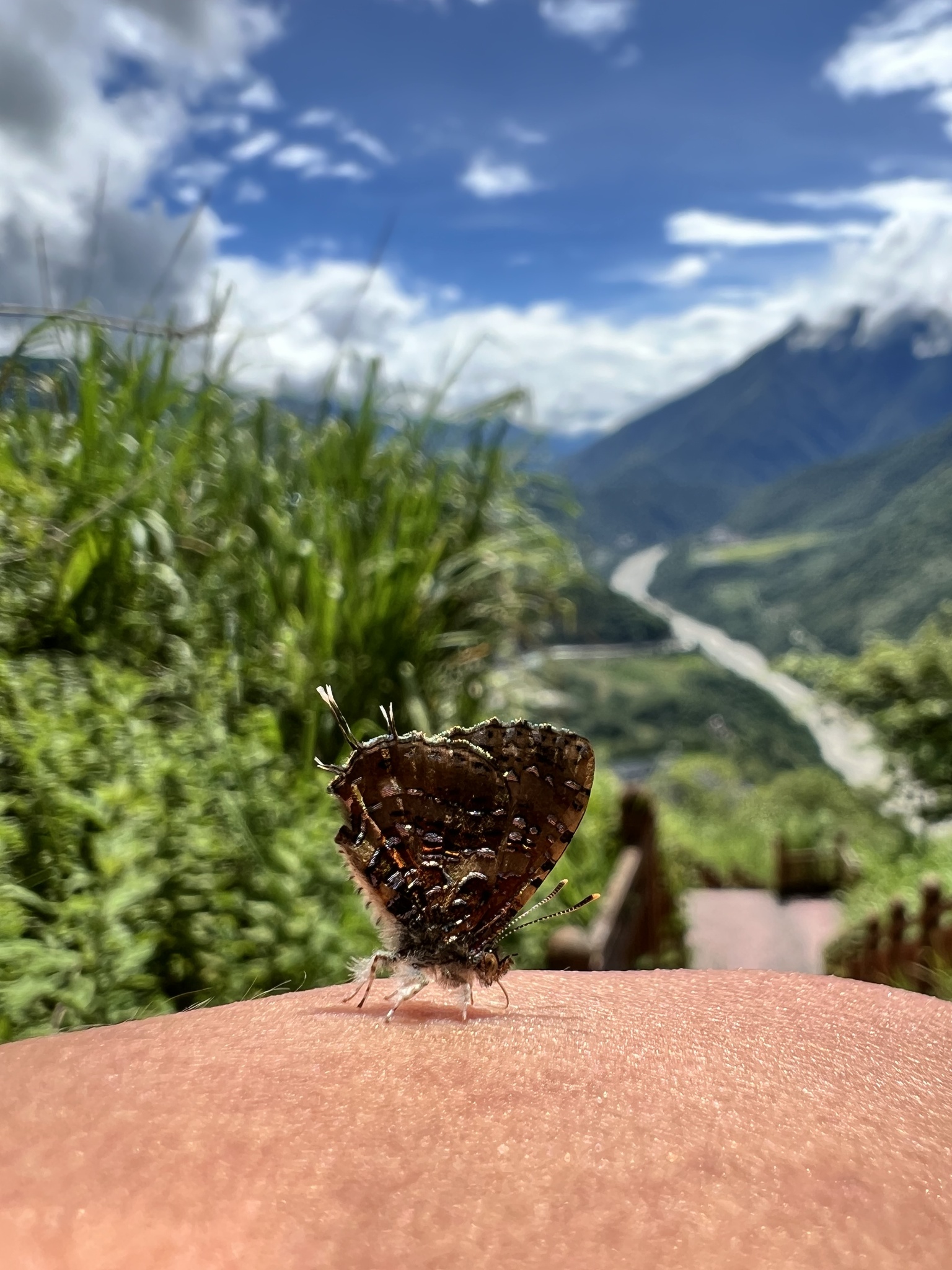
It was not the biggest butterfly in the forest, but it was the shiniest. Resting on a leaf with its wings closed in Medog, this one showed a neat pattern of browns, and then the light shifted and the underside flashed with patches of metallic silver, like strips of tinsel caught in the sun.
This is Catapaecilma major, the Common Tinsel, a butterfly of the gossamer-winged family Lycaenidae in the order Lepidoptera. Lycaenids are mostly small butterflies, often with jewel-like colors, and many are closely tied to ants, which tend their caterpillars in exchange for sweet secretions.
The common name comes from that tinsel effect: the underside is decorated with bright metallic patches that catch the light as the butterfly shifts its wings. The species name major, meaning larger, sets this one apart from its relatives, and it is indeed a big, bold lycaenid, easy to spot even among the crowd of forest butterflies. Lycaenids are sometimes called the gossamer wings, and the name fits: the wings are thin enough to look translucent at the edges. Like many of its kin, this one perched with wings closed, showing only the patterned underside, and followed the house style perfectly.
It sat long enough for a slow approach, then flicked away into the undergrowth, a brief silver glint that vanished into the green. Small and easy to overlook, it was the kind of butterfly that rewards the patient eye with something like a wink of light, a quiet, common creature doing something extraordinary in the half-light.