The harmless giant of the fly world
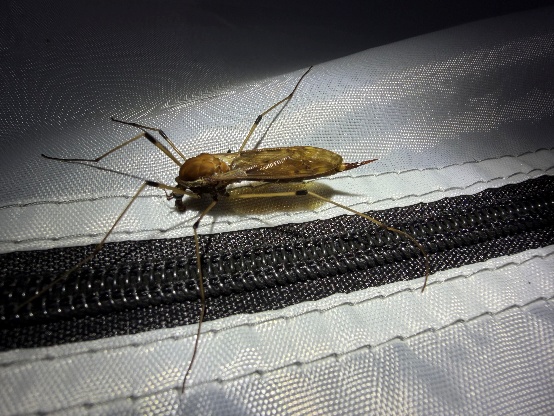
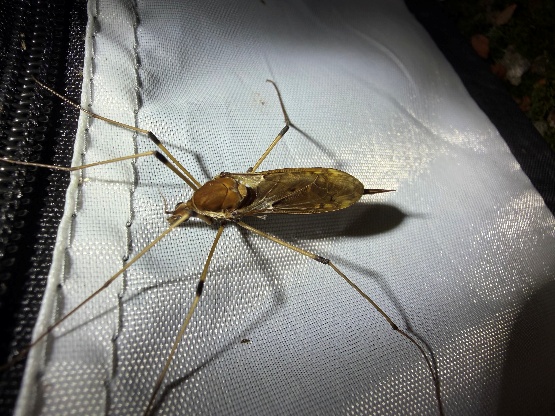
At first glance it looks like a mosquito with ambitions: a large, slender body and legs so long they seem to have been stretched by hand. But this is no blood-feeder. It is a crane fly, one of the gentlest insects you can meet.
This is Brithura nymphica Alexander, 1927, a member of the family Tipulidae (order Diptera) and of the genus Brithura Edwards, 1916. The identification was revised in August 2026: this is not a species of Tipula as earlier noted, but one of the Brithura.
Brithura is a small but remarkable genus of crane flies, currently with 16 described species spread across the East Palaearctic and Oriental regions, 12 of them recorded from China. Adults are among the largest representatives of the whole family Tipulidae. The genus can be recognised by a stout body, a head with the vertex produced into a prominent tubercle, a conspicuous pleurotergal tubercle with dense pubescence on its dorsal face, and, in males of some species, a bulge of the costal border opposite the stigma.
Brithura nymphica was described by Charles P. Alexander in 1927, and in China it is known from Beijing and from historical material collected on Mount Emei, Sichuan. The Beijing records on iNaturalist, all research grade, span July and August across several recent years, which matches a summer adult season.
Crane flies are easily recognised by their extremely long, fragile legs and slender wings. Unlike mosquitoes, the adults of most species have weak mouthparts and feed little or not at all; their short adult life is mostly about mating and laying eggs. The larvae, called leatherjackets, live in soil, moss or decaying plant matter and feed on roots and detritus. In Brithura the immature stages remained completely unknown until 2025, when the final instar larva was described for the East Palaearctic species B. sancta, together with DNA barcoding of the genus.
Because they resemble giant mosquitoes, crane flies are often feared, but they are completely harmless to humans. The two photographs below show the same individual from different angles.